
Water Heater Solutions
Why Your Water Heater's Pressure Relief Valve Keeps Dripping
Learn what a dripping safety valve means for your home's water heater and how to handle it safely.
September 27, 2026
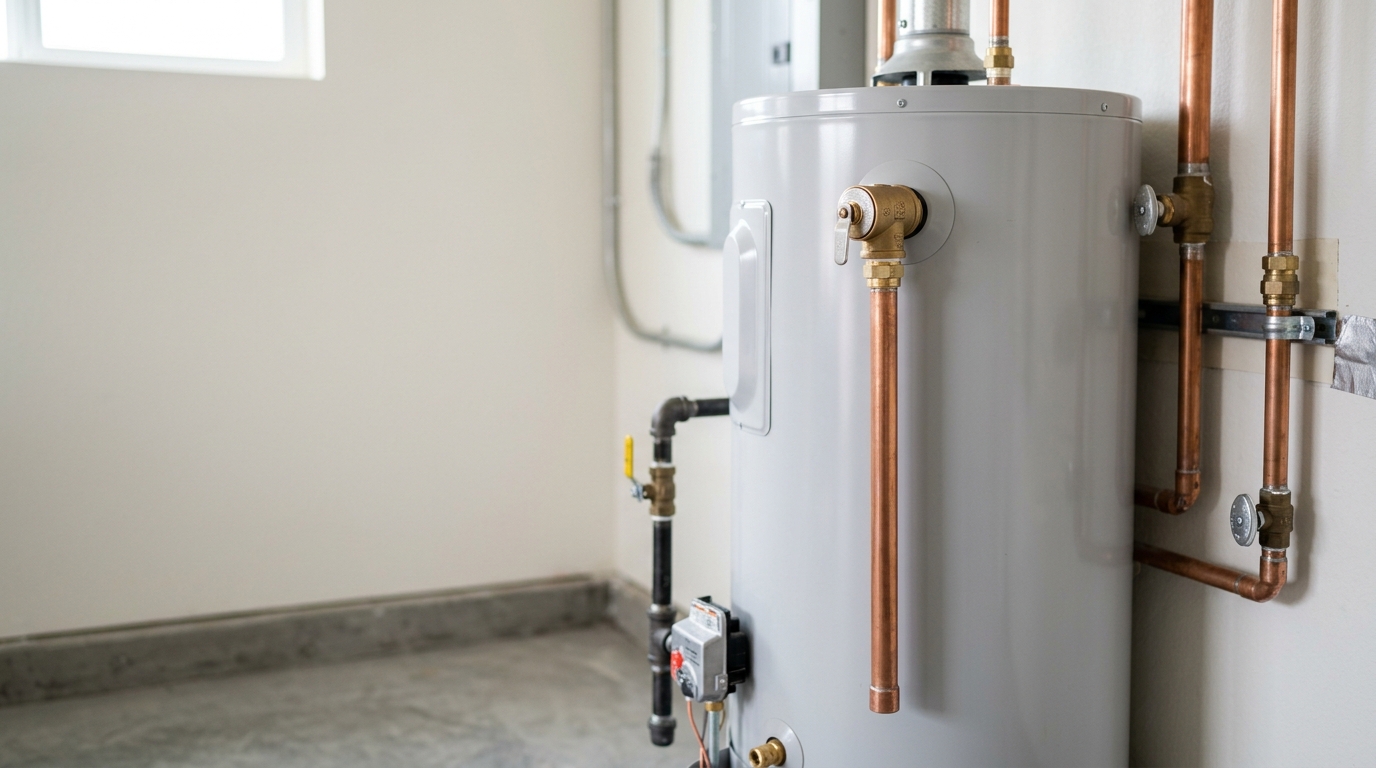
Why does my water heater's pressure relief valve keep dripping? The pressure relief valve—often called the T&P valve—is a built-in safety device on your water heater designed to protect your tank from extreme conditions. Its job is to release water and relieve pressure if the tank gets too hot or builds up too much force. A steady drip or puddle beneath the valve usually means something inside the tank is building up more pressure or heat than it should, causing the valve to do its job and vent that excess energy.
Finding moisture around your water heater can be unsettling, but understanding how the temperature and pressure relief system operates will help you take the right steps without compromising your home's safety.
Understanding the Temperature and Pressure Relief Valve
Your water heater is a sealed pressure vessel. As cold water enters the tank and heats up, it naturally expands in volume—a physical process known as thermal expansion. If the water gets too hot or if the water volume expands without anywhere to go, the internal pressure climbs.
The temperature and pressure (T&P) valve is calibrated to open automatically if the internal temperature reaches approximately 210 degrees Fahrenheit or if the pressure climbs above 150 pounds per square inch (PSI). When open, it discharges hot water through an attached overflow pipe safely downward toward the floor. While an occasional tiny discharge can happen during heavy heating cycles, a persistent drip is a clear signal that the system is experiencing ongoing stress.
Important Do's and Don'ts for Homeowners
Because the relief valve is a safety mechanism, how you react to a leak matters significantly. Following these guidelines helps maintain safety while gathering helpful details for a technician:
- Never cap or plug the discharge pipe: Under no circumstances should you ever place a cap, plug, or shutoff valve on the relief valve or its discharge line. Blocking this outlet removes the tank's only safety vent, creating dangerous pressure buildup inside your plumbing system.
- Never force the lever shut: The small test lever on top of the valve allows for manual testing. If the valve is dripping, trying to force, wire, or clamp the lever down will not fix the underlying pressure and will compromise the mechanism.
- Do check your thermostat settings: Look at the temperature dial on your water heater. For most households, a setting around 120 degrees Fahrenheit is standard and safe. If the thermostat has been bumped to an unusually high setting, the water may simply be overheating and triggering the valve.
- Do monitor the frequency and timing: Take note of whether the valve drips continuously throughout the day or only while the burner or heating elements are actively running. This detail provides valuable diagnostic clues.
Why Does the Valve Keep Dripping?
A dripping T&P valve rarely points to a simple fix on the valve itself. Instead, the dripping is usually a symptom of a broader condition within your home's plumbing:
1. Thermal Expansion in a Closed System
Many modern residential plumbing systems are "closed systems" due to check valves, backflow preventers, or pressure-reducing valves installed at the main water supply. In a closed system, expanding hot water has nowhere to escape back into the municipal main. Without an expansion tank to absorb this extra volume, the expanding water pushes internal pressure beyond the safety limit, forcing the relief valve to weep.
2. High Municipal Water Pressure
If the incoming water pressure from the street exceeds normal residential levels (typically 40 to 80 PSI), your water heater starts each heating cycle at a baseline pressure that is already too high. Adding thermal expansion pushes it over the threshold.
3. Thermostat Failure
If a thermostat malfunctions and fails to signal the heating elements or burner to turn off, water temperatures can climb toward the boiling point. The valve opens to prevent extreme overheating.
4. Mineral Accumulation
Over time, hard water minerals can collect along the rubber seal and brass seat inside the valve. Even when system pressure is normal, these mineral deposits can prevent the valve from sealing tightly after a normal discharge.
Why You Need a Professional Assessment
Attempting to resolve a leaking relief valve by simply buying a replacement valve at a hardware store often fails. If the root cause is thermal expansion, excessive incoming pressure, or an overheating thermostat, a brand-new valve will start dripping almost immediately because the underlying system stress remains unresolved.
A professional plumber checks the incoming water pressure, tests the thermostats, evaluates the condition of the tank, and verifies whether a thermal expansion tank needs to be installed or replaced. An expansion tank provides a dedicated, pressurized bladder that cushions expanding water, protecting both your water heater and your fixtures from premature wear.
This is exactly the type of diagnostic and repair work that The Drain Man Plumbing's water heater installation and service team handles safely and thoroughly. Our technicians examine every component of your water heating setup to address the true source of pressure or heat buildup.
Get Reliable Water Heater Service in Jefferson City
If your water heater's pressure relief valve is steadily dripping or pooling water, protect your home by having the system inspected by an experienced local professional. Contact The Drain Man Plumbing today to schedule your water heater evaluation and keep your home's hot water running safely and smoothly.