
General Plumbing Repair
Why Does My Toilet Keep Running? Causes, Fixes, and When to Call a Pro
Learn what causes that constant running sound in your toilet tank, how to test simple fixes yourself, and when to seek professional plumbing help.
September 8, 2026
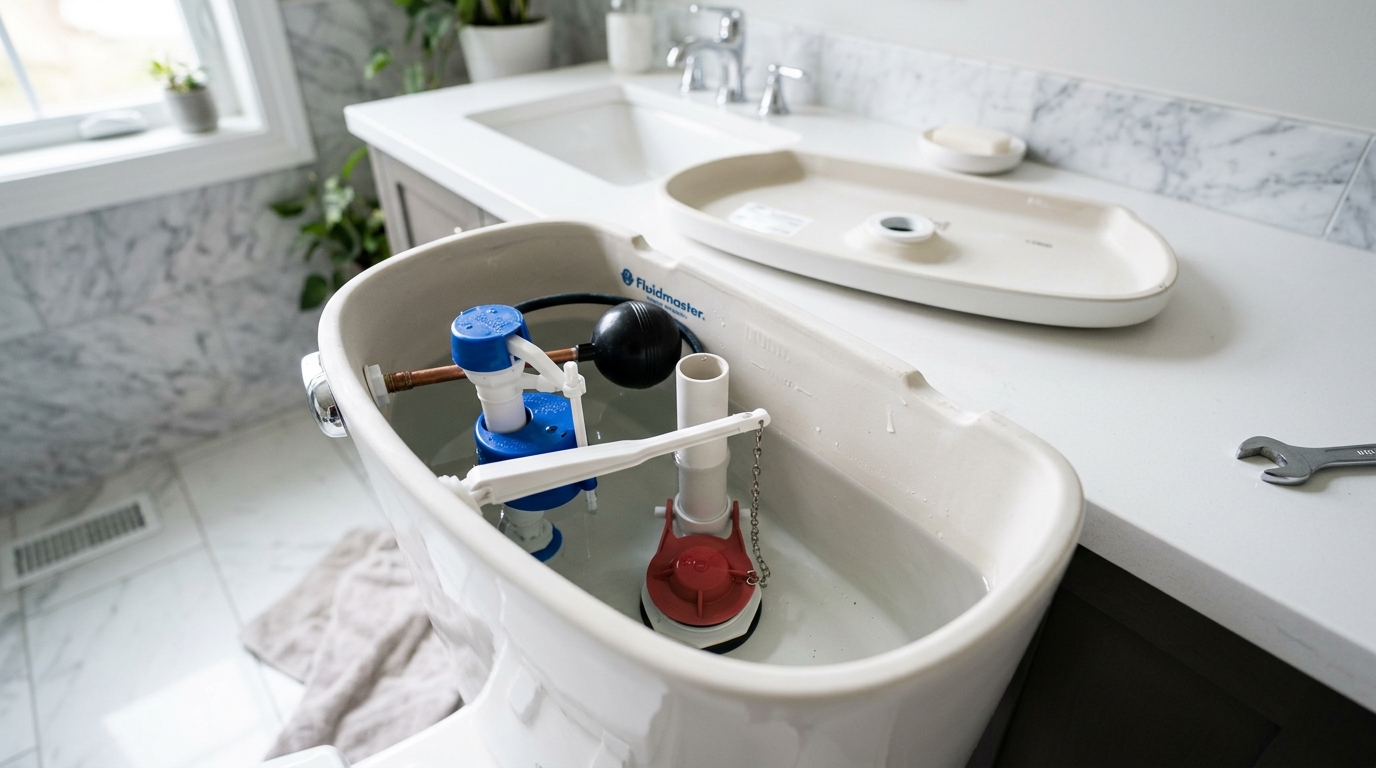
Why does my toilet keep running after I flush? In short, your toilet keeps running because water is continuously draining from the tank into the bowl, which prevents the tank from staying full. When the water level never reaches the right height, the valve inside never gets the signal to shut off, so fresh water keeps flowing into the tank. This usually happens when an internal rubber seal wears out, a lift chain gets caught, or the float valve is set to the wrong height.
The Usual Culprits Behind a Running Toilet
Inside your toilet tank is a simple collection of mechanical parts that work together after every flush. When one component falls out of alignment or wears out over time, the entire cycle fails to close. Here are the most common reasons your toilet keeps running:
- A Worn or Warped Flapper: The flapper is the flexible rubber or silicone disc at the bottom of the tank. When you push the flush handle, it lifts up to let water rush into the bowl, then drops back down to form a watertight seal. Mineral deposits, age, and in-tank cleaning chemicals can cause the rubber to harden, warp, or rot, allowing a steady trickle of water to leak into the bowl.
- An Incorrect Chain Length: A small metal or plastic chain connects the flush handle lever to the flapper. If the chain is too tight, it will not allow the flapper to close completely. If the chain is too loose, it can slip underneath the flapper as it closes, breaking the seal and letting water leak out continuously.
- A Misadjusted or Faulty Fill Valve: The fill valve (often called a ballcock) refills the tank after a flush. It relies on a float that rises with the water level. If the float is adjusted too high, water will constantly spill over the top of the overflow tube. If the fill valve itself is old or clogged with mineral sediment, it may fail to shut off even when the float reaches the proper height.
What a Running Toilet Costs on Your Water Bill
It is easy to tune out the quiet hissing or trickling sound coming from the bathroom, but leaving a running toilet unaddressed can be surprisingly expensive. A toilet that runs non-stop can waste hundreds of gallons of clean, treated water every single day. Over weeks or months, that constant drain leads to a noticeable spike on your municipal water and sewer bills.
Beyond the direct financial cost, a constantly running fixture puts unnecessary wear on your home's plumbing supply lines and shutoff valves. Fixing the issue promptly saves money each month and prevents unnecessary water waste.
Simple DIY Repairs You Can Try
Homeowners comfortable with basic household tasks can often troubleshoot and fix minor toilet issues without specialized tools:
- Check the chain: Remove the tank lid and look at the chain. Ensure it has about a half-inch of slack when the flapper is closed. If it is tangled or caught on the flush arm, untangle it and adjust the clip position.
- Clean or replace the flapper: Turn off the water supply valve located on the wall beneath the tank, flush the toilet to empty the tank, and inspect the flapper. If it feels brittle or shows visible cracks, unhook it from the overflow tube posts and install a matching replacement from your local hardware store.
- Adjust the water level: Look for the water line mark stamped on the inside of the porcelain tank or the overflow tube. If the water level is rising above the overflow pipe, locate the adjustment screw or clip on your fill valve float arm and turn it to lower the shutoff point until the water stops about an inch below the top of the overflow tube.
When It Is Best to Call a Plumber
While flappers and chains are easy to handle, some toilet repairs require more extensive disassembly or diagnosis. It is wise to contact a licensed professional in the following situations:
- The toilet continues to run even after replacing the flapper and adjusting the fill valve.
- The shutoff valve underneath the toilet is seized, leaking, or difficult to turn.
- The flush valve seat at the base of the tank is cracked or severely corroded, requiring the entire tank to be unbolted from the bowl.
- Water is leaking onto the bathroom floor around the base of the toilet or from the tank bolts.
- You have older or non-standard plumbing fixtures where universal replacement parts do not fit properly.
Reach Out to The Drain Man
If your toilet continues to run or you would prefer a licensed technician to handle the repair quickly and correctly, connect with The Drain Man. Serving Jefferson City, Tennessee, and nearby communities, our team is ready to inspect your bathroom fixtures, repair faulty mechanisms, and keep your home's plumbing operating efficiently.