
General Plumbing Repair
Why Does Your Outdoor Spigot Leak Every Spring? Causes and Solutions
Learn why exterior faucets crack during winter, how to spot hidden leaks inside your walls, and how to prevent freezing damage.
August 8, 2026
Why does my outdoor spigot leak every spring when I turn it back on?
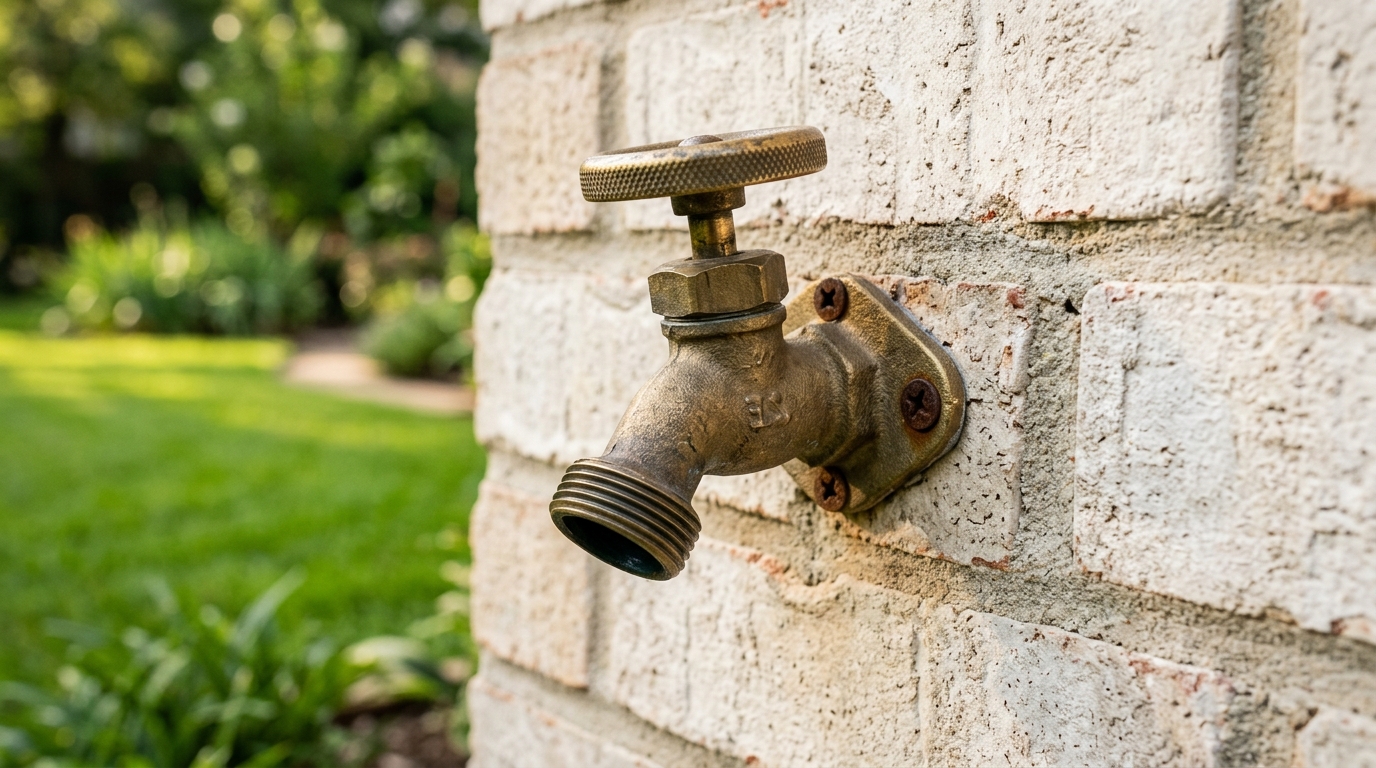
The simple answer is that water trapped inside the pipe froze over the winter. When water gets cold enough to turn into ice, it expands and needs more room. That expanding ice pushes against the pipe walls with tremendous strength until the metal or plastic splits open. Even if the handle and faucet outside your house look perfectly fine, the pipe tucked just behind your siding or foundation may have cracked months ago. As soon as you open the valve for spring gardening or washing the car, pressurized water flows straight through that hidden split.
How to Safely Test Your Outdoor Spigot in the Spring
When spring arrives in Jefferson City, Tennessee, turning on your exterior faucets is often one of the first seasonal chores. However, turning a spigot on without checking for hidden damage can lead to sudden water pooling where you least expect it. Here is how you can safely inspect your outdoor faucets before hooking up your garden hoses.
First, walk outside and ensure no hoses, spray nozzles, or splitters are attached to the spigot. Slowly turn the handle counterclockwise to start the water flow. Pay attention to how the water comes out. If the water pressure seems weak or sputters unevenly, that can be an early sign that water is escaping through a crack before it reaches the spout.
Next, do not just look at the end of the faucet. Look closely at the connection where the spigot meets your exterior brick, stone, or siding. Water should not be dribbling out from behind the wall plate or trickling down the foundation. If you see water seeping around the base of the fixture, turn it off immediately.
Finally, inspect the inside of your home directly behind the spigot location. If the faucet connects above a crawlspace or basement, head down with a flashlight and check the pipe while someone else briefly turns the water on outside. If the spigot is located against a finished living room, laundry room, or garage wall, look for damp drywall, peeling paint, or the sound of running water inside the wall cavity. Catching a leak during this initial test prevents gallons of water from soaking your insulation and framing.
Why Frost-Free Faucets Still Freeze
Many modern homes feature frost-proof sillcocks. These fixtures have a long stem that places the actual shut-off valve 8 to 14 inches inside the warm perimeter of the home. When installed with a slight downward slope, any leftover water is supposed to drain out naturally when the handle is closed.
However, frost-free faucets can still fail if a garden hose is left attached during freezing weather. A connected hose prevents the water inside the barrel from draining out. When winter temperatures drop below freezing, that trapped water freezes and splits the long brass casing inside the wall. Because the actual valve seat sits deep inside your wall, no water leaks out until you open the faucet handle in the spring. Once opened, water rushes into the burst pipe casing and floods directly into your wall cavity.
How to Properly Shut Off and Drain Outdoor Spigots in the Fall
Preventing burst spigots requires a few simple winterization steps every autumn before the first hard freeze hits East Tennessee:
- Disconnect all hoses and accessories: Remove garden hoses, timers, splitters, and quick-connect adapters from every outdoor faucet. Drain the hoses and store them for the winter.
- Locate your indoor shut-off valve: Many plumbing systems have a dedicated isolation valve inside the basement, crawlspace, or utility closet for each exterior spigot. Turn this interior valve completely off.
- Open the outdoor spigot: Go outside and turn the faucet handle fully open. This allows all remaining water in the line to drain out. Leave the outdoor valve open all winter so any leftover moisture has room to expand safely.
- Open the bleeder cap indoors: If your indoor shut-off valve has a small brass bleeder cap on the side, place a small bucket beneath it and unscrew the cap to drain the small pocket of water trapped between the indoor valve and the outside wall. Screw the cap back on hand-tight once it finishes dripping.
When to Call a Professional Plumber
If you discover that your spigot is leaking behind the wall, this is not a repair that can be fixed from the outside with tape, sealant, or a new washer. A split pipe inside a wall cavity, crawlspace, or brick exterior requires accessing the damaged piping, cutting out the ruptured section, and soldering or crimping new pipe and fittings securely in place.
This type of repair is a regular part of the general plumbing services provided by The Drain Man Plumbing each spring. Our team can access the damaged line, repair or replace split piping, and install durable, properly pitched frost-free fixtures designed to protect your home through future winters.
Get Your Outdoor Plumbing Ready for Spring
If your exterior spigot is leaking, spraying water against your foundation, or showing signs of low pressure, avoid turning it back on until it has been inspected by a qualified professional. Contact The Drain Man Plumbing in Jefferson City, Tennessee, by phone or through our website contact form to schedule your outdoor faucet repair today.