
Drain Cleaning
Why Does My Laundry Room Sink Drain Slowly on Wash Day?
Simple troubleshooting steps for laundry drain clogs and when to seek professional drain cleaning.
September 19, 2026
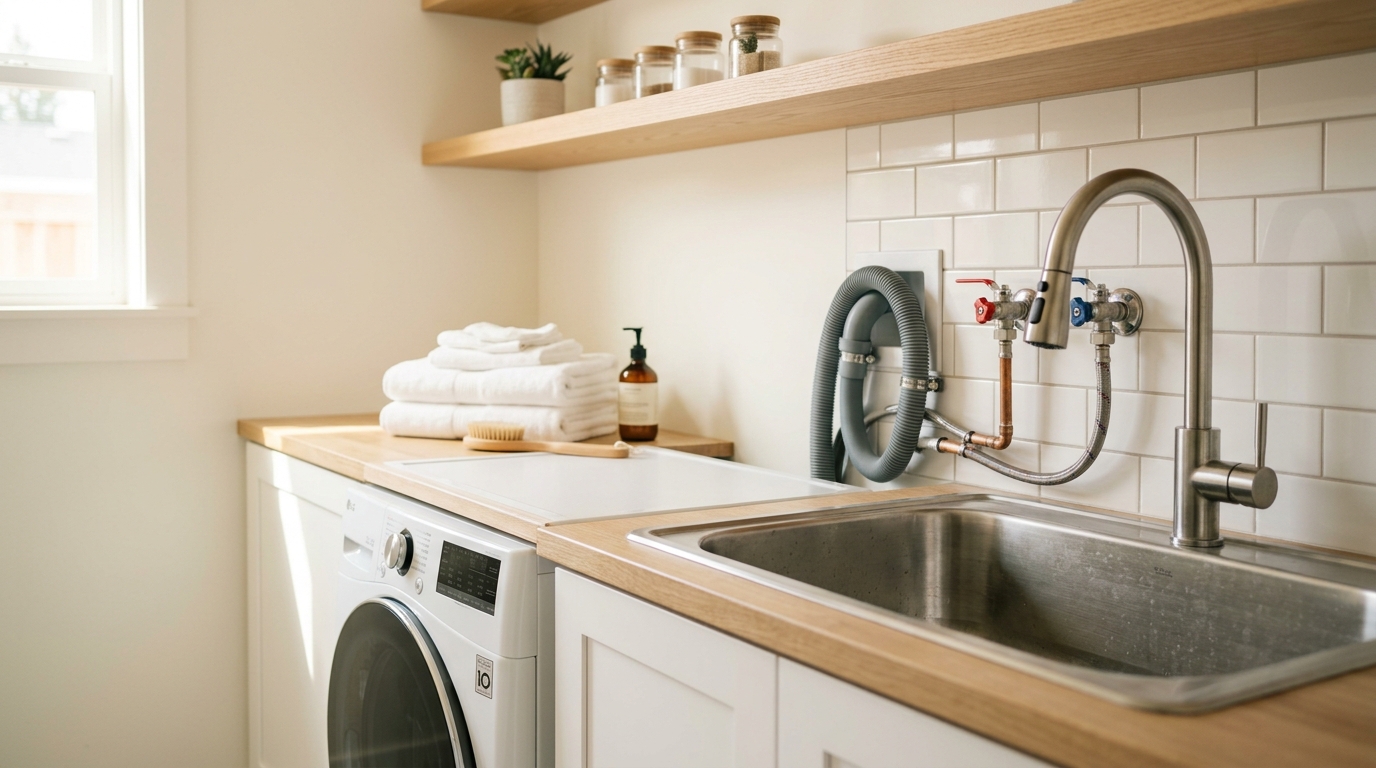
Why does my laundry room sink drain so slowly on wash day? The short answer is that lint and detergent residue from your washing machine's discharge hose are the most common culprits. In most homes, the utility sink and the washing machine share the same drainage pipe behind the wall. When your washer drains, it pumps out gallons of water mixed with tiny fabric threads, hair, and thick soap residue. Over time, this sticky mixture coats the inside of your pipes. On heavy laundry days, the high volume of water rushes in faster than the narrowed pipe can carry it away, causing water to back up into the utility sink or drain at a crawl.
Dealing with a sluggish laundry sink can turn a routine chore into a frustrating chore. Understanding why this happens and knowing what steps you can take yourself can help keep your laundry routine running smoothly.
How Your Laundry Drainage System Works
To understand why wash day causes backups, it helps to picture how your laundry room plumbing is arranged. Your washing machine empties through a flexible discharge hose that either hooks directly into a dedicated standpipe or hangs over the side of a utility sink. In both configurations, the water enters a common drain pipe that connects to your home's main wastewater system.
Washing machines do not gently release water; an electric pump discharges up to twenty or more gallons of water in just a minute or two. If the drain pipe has accumulated even a moderate coating of lint, pet hair, fabric softener, and undissolved detergent, that sudden surge overwhelms the line. The water naturally rises up the path of least resistance, which is often your utility sink drain.
Short-Term Fixes You Can Try at Home
Before assuming the worst, there are a few practical maintenance steps every homeowner can try to improve drainage and prevent immediate buildup:
1. Add a Mesh Lint Trap to the Discharge Hose
One of the easiest and most cost-effective ways to protect your plumbing is to install a simple mesh lint filter over the end of your washing machine discharge hose. These inexpensive metal or nylon mesh sleeves catch loose fibers, pet hair, and debris before they ever enter the drain pipe. Secure the mesh trap with a zip tie or clamp, and inspect it regularly, replacing it as soon as it fills with lint.
2. Clean the Visible Standpipe and Sink Strainer
Lint and soap scum often accumulate right at the entrance of the plumbing fixtures. If your discharge hose sits in a standpipe, pull the hose out gently and inspect the opening with a flashlight. Remove any visible clumps of lint or slime using a gloved hand or a small wire drain brush. If your machine drains into a utility sink, remove and clean the sink's basket strainer and the immediate drain opening beneath it.
3. Flush the Line with Hot Water
Detergent fats and fabric softeners solidify as they cool inside your pipes. Running very hot water down the utility sink for several minutes can help soften and dissolve light soap buildup along the pipe walls. While hot water will not break up a dense lint plug, it can help clear superficial sludge and restore partial flow.
What to Avoid: Chemical Drain Cleaners
When faced with a slow drain, many homeowners reach for commercial liquid drain cleaners. However, these harsh chemicals can do more harm than good. Chemical cleaners generate heat through corrosive chemical reactions, which can soften or damage PVC piping, degrade rubber seals, and corrode older metal lines. Furthermore, if the chemical fails to clear the obstruction, you are left with a sink or pipe filled with toxic, standing liquid that poses a safety hazard.
When It Is Time for Professional Drain Cleaning
DIY measures like lint traps and hot-water flushes are great for regular maintenance, but they only address the surface. If your laundry sink continues to drain slowly or backs up after trying these steps, the clog is located further down the line where standard household tools cannot reach.
Deeper clogs typically consist of years of compacted lint felted together with hardened soap deposits. These obstructions require mechanical clearing methods that scour the interior of the pipe without damaging the plumbing structure. You should consider professional help if you notice any of the following signs:
- Water backs up into the sink every single time the washing machine enters its drain cycle.
- You hear bubbling or gurgling sounds coming from the laundry sink or nearby floor drains when the washer runs.
- Draining the utility sink causes water to rise in a nearby floor drain or adjoining bathroom fixture.
- Unpleasant sewer or stagnant-water odors linger around the laundry drain even when the room is clean.
Professional Drain Solutions in Jefferson City
Clearing heavy, deep-seated lint and sludge buildup is exactly what The Drain Man Plumbing's drain cleaning service handles. Using specialized equipment designed to safely navigate residential plumbing lines, professional drain cleaning removes stubborn blockages and restores proper flow to your laundry room drainage system.
If slow drains are slowing down your laundry routine in Jefferson City, Tennessee, contact The Drain Man Plumbing today by phone or through our website to schedule your residential drain cleaning service.