
Hydro Jetting
Why Your Kitchen Drain Still Smells After Snaking (And How to Fix It)
Discover why standard drain snaking can leave foul odors behind in your kitchen lines and how hydro jetting completely clears the pipe.
August 26, 2026
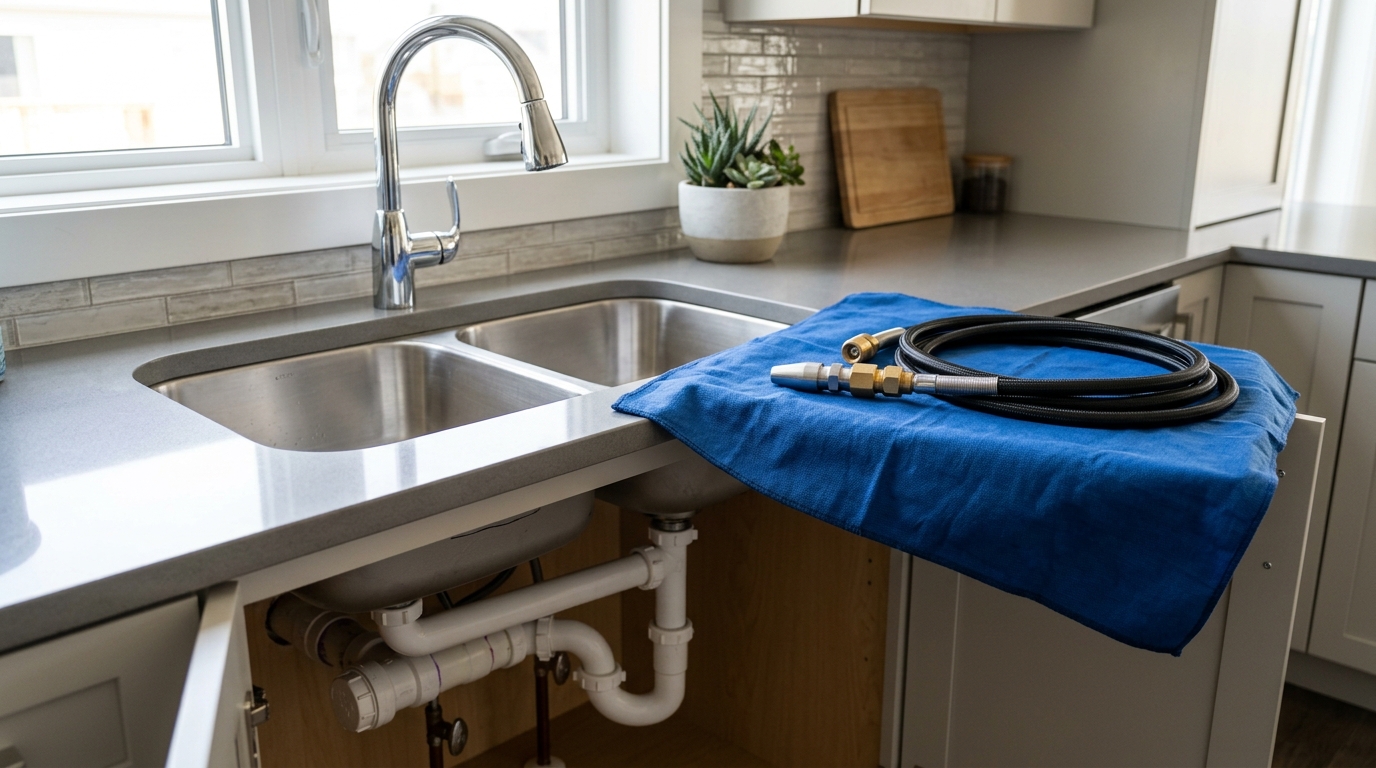
Why does my kitchen line still smell bad even after having it professionally snaked?
When a plumber uses a drain snake, the metal cable spins down the line and cuts a small path right through the middle of the clog so water can flow again. However, a snake does not wash or scrub the inside of your pipes. Thick coatings of old cooking grease, rotten food bits, and sticky gunk stay stuck to the pipe walls. Because that decaying waste is still glued inside the drain, the bad smell remains in your kitchen, and brand-new clogs can quickly build up in the very same spot.
Understanding the Mechanics of a Kitchen Drain Clog
Kitchen sink drain lines face a unique set of challenges compared to bathroom lines. While bathroom clogs are mostly caused by hair and soap residue, kitchen drains collect fats, oils, and grease—often referred to in the plumbing trade as FOG. When warm grease washes down the sink, it cools down as it travels through the plumbing under your floor or in your crawl space. As it cools, it solidifies into a waxy, sticky paste that lines the pipe walls.
Over time, bits of food, coffee grounds, and dish soap stick to this greasy layer, creating a thick, narrowing sleeve of organic matter inside the pipe. When a standard mechanical drain snake (also called an auger) is sent down the line, its primary job is simply to puncture and break apart the primary obstruction to get water moving. The rotating tip creates a hole through the center of the blockage, but it leaves the stubborn, rotting grease coating intact along the perimeter of the pipe wall. That remaining grease continues to decompose, emitting sour, foul-smelling sewer gases straight up through your sink drain.
What You Can Do in the Meantime
If you are dealing with a lingering odor or slow drainage while planning for a permanent fix, taking active preventive measures can prevent the remaining buildup from worsening:
- Never pour cooking oil, butter, or grease down the drain: Pour used oils and pan grease into a disposable container or allow them to cool and wipe them out with a paper towel before washing pans.
- Scrape all food waste into the trash: Even small food particles will stick to the existing grease layer inside your pipes, accelerating bacterial growth and odor production.
- Flush the drain with hot tap water after doing dishes: Let very hot water run for thirty to sixty seconds after washing greasy cookware to help wash loose surface oils deeper into the sewer line rather than letting them settle immediately under the sink.
- Avoid relying on chemical drain cleaners: Caustic store-bought chemicals rarely dissolve dense grease walls entirely; instead, they sit against the pipe material, generating heat that can weaken seals, warp PVC, or corrode older metal lines without removing the source of the smell.
The Long-Term Solution: How Hydro Jetting Solves the Problem
To eliminate both the stubborn odor and the risk of recurring kitchen backups, the interior surface of the pipe must be completely cleaned down to the bare wall. This is where hydro jetting becomes the ideal method.
Hydro jetting utilizes specialized equipment that pressurizes plain water up to several thousand pounds per square inch (PSI). A flexible hose equipped with a multi-directional nozzle is fed into the drain line. The nozzle blasts forward-facing and reverse-facing streams of high-pressure water directly against the pipe walls. This powerful 360-degree scouring action achieves several things that standard mechanical snaking cannot:
- Emulsifies and strips grease: The force of the water breaks down hard grease deposits and separates them cleanly from the pipe wall.
- Flushes away sludge and food particles: Rather than leaving debris behind, the high volume of water flushes all loosened materials downstream into the municipal sewer or septic tank.
- Restores full pipe diameter: By stripping away the entire inner coating of grime, hydro jetting brings the drain pipe back to its original internal circumference, allowing water to flow at full speed.
When The Drain Man Plumbing Recommends Hydro Jetting
At The Drain Man Plumbing, we always aim to diagnose the actual source of a drainage issue rather than offering a quick patch. When snaking relieves a backup but leaves a sour odor or results in repeated clogs just weeks later, our team recommends hydro jetting as the definitive solution.
By thoroughly scouring the full length of the kitchen line, hydro jetting removes the decaying organic matter causing the bad smell and restores your plumbing system's efficiency for the long run.
Schedule Professional Drain Cleaning in Jefferson City, TN
If your kitchen sink drain still smells unpleasant or continues to drain slowly despite recent snaking, The Drain Man Plumbing is ready to help. Homeowners in Jefferson City, Tennessee, and surrounding communities can connect with our team by visiting our contact page or calling us directly to set up a comprehensive drain line assessment.