
General Plumbing Repair
Why Is My Water Pressure So Low? Causes and Fixes for Jefferson City Homes
Discover what causes weak water flow in your home, simple DIY checks to try first, and when it is time to bring in a professional plumber.
September 8, 2026
Why is my water pressure so low?
Low water pressure usually happens when something blocks the flow of water into your house or through your pipes. It can be as simple as a dirty screen on the tip of a faucet, or it can be a problem like an underground leak or an aging valve. When water cannot move freely through the plumbing system, the flow coming out of your sinks and showers turns into a weak trickle.
When your shower loses its steady stream or your kitchen sink takes twice as long to fill a pot, daily routines quickly become frustrating. In Jefferson City and surrounding East Tennessee communities, low water pressure can stem from a variety of sources ranging from routine mineral buildup to mechanical valve failures. Understanding where the restriction starts is the first step toward getting your water flow back to normal.
The Most Common Causes of Low Water Pressure
Because residential plumbing involves a network of supply pipes, valves, and fixtures, a drop in pressure can develop in several distinct places:
- Clogged Aerators and Fixture Screens: Over time, tiny particles of sediment and dissolved minerals collect on the small mesh aerators screwed onto the ends of faucets and showerheads. When these screens get clogged, water struggles to pass through the individual fixture, even if the rest of the house has normal pressure.
- Mineral Scale and Pipe Corrosion: In homes with older galvanized steel pipes or areas with mineral-rich water, scale can gradually coat the interior walls of your supply lines. Over decades, this buildup narrows the pipe's internal diameter, constricting water flow like a clogged artery.
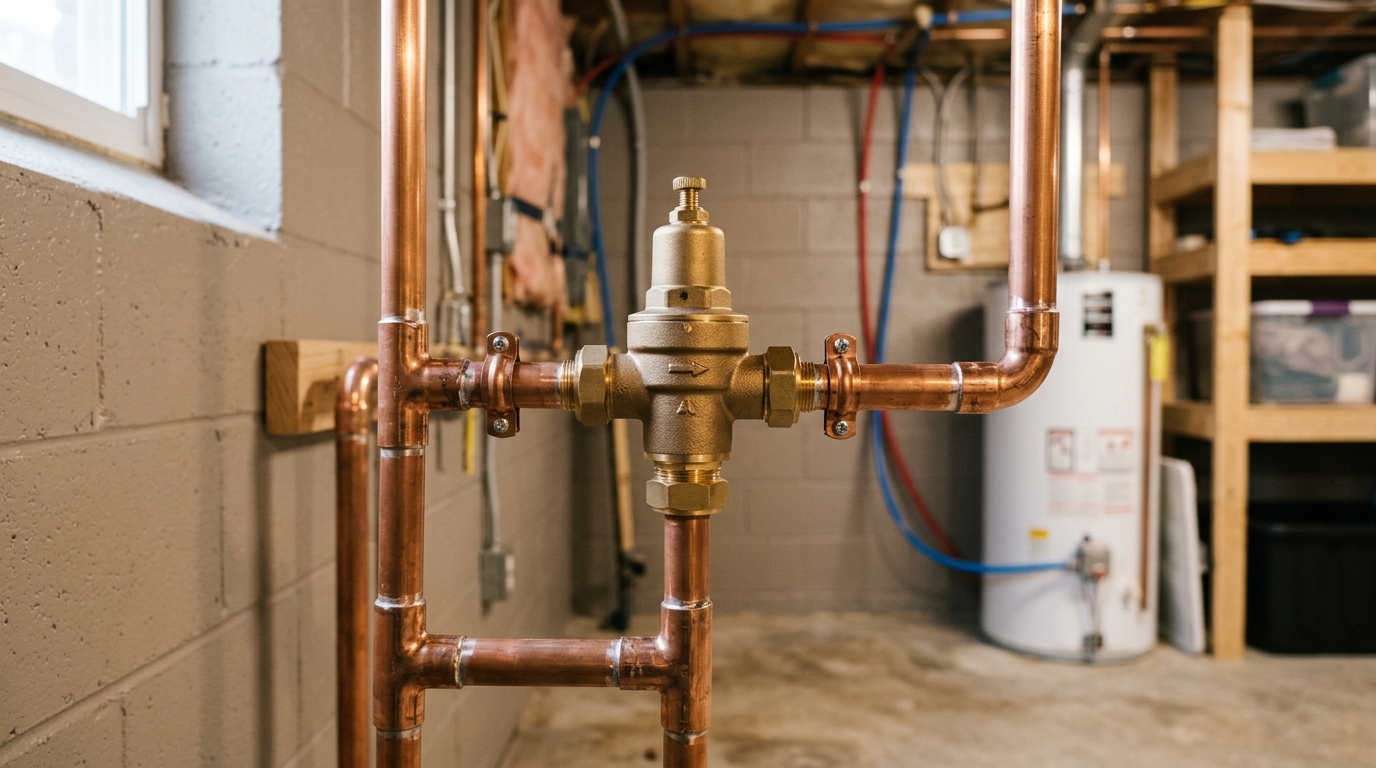
- A Failing Pressure-Reducing Valve (PRV): Many homes have a bell-shaped brass valve located near the main water shut-off called a pressure-reducing valve. Its job is to keep municipal water pressure at a safe level for your home's pipes. When the internal spring or diaphragm inside the PRV wears out, it often fails closed, causing a sudden or gradual drop in pressure throughout the entire house.
- A Hidden Plumbing Leak: If a supply pipe cracks behind a wall, under a concrete slab, or in the yard between the meter and your home, water escapes before it reaches your faucets. This diversion reduces the pressure delivered to your fixtures while quietly wasting water.
Simple Checks You Can Do Yourself
Before assuming the worst, you can perform a few basic troubleshooting steps to narrow down where the issue is located:
- Check Multiple Fixtures: Test every sink, shower, and outdoor spigot. If only one faucet has poor flow, the issue is isolated to that specific fixture or its direct supply line. If every fixture is weak, the problem lies in your main supply line or a shared component.
- Compare Hot and Cold Water: Turn on the cold water by itself, then test the hot water. If the pressure drops only when running hot water, the restriction is likely connected to your water heater's shut-off valve, supply connections, or sediment inside the tank.
- Inspect Your Main Shut-Off Valves: If you recently had plumbing work done or shut off your water for travel, verify that your main shut-off valve and your meter valve are turned completely to the open position. Even a partially closed valve will noticeably restrict flow.
- Clean Your Aerators: Unscrew the small mesh aerator from the end of the affected faucet. Rinse away any loose grit and soak the aerator in warm white vinegar to dissolve stubborn mineral deposits before screwing it back into place.
Signs It Is Time to Call a Professional Plumber
While clearing an aerator is an easy weekend task, some pressure issues require professional diagnostic tools to fix safely. You should reach out for expert assistance if:
- You notice an abrupt drop in pressure across the entire house with no obvious explanation.
- Your water meter's leak indicator spins when all faucets and appliances are turned off.
- You hear water running behind walls or notice damp patches, warm spots on floors, or unexplained soggy areas in your yard.
- Adjusting or replacing a pressure regulator is required, as incorrect installation can lead to high pressure that damages appliances or causes pipe joints to fail.
- Your home has older piping that requires professional inspection to check for internal corrosion or severe scaling.
Schedule a Pressure Diagnostic with The Drain Man
If you are tired of guessing why your faucets have lost their force, let a local specialist pinpoint the exact cause. Reach out to The Drain Man in Jefferson City, Tennessee, to book a comprehensive water pressure diagnostic visit. Our team will inspect your valves, check your supply lines, and restore reliable, balanced water flow throughout your home.