
General Plumbing Repair
Why Is My Tap Water Cloudy? The Simple Glass Test Every Homeowner Should Know
Discover why your tap water looks milky, how to test it yourself in minutes, and when it is time to have your plumbing inspected.
August 10, 2026
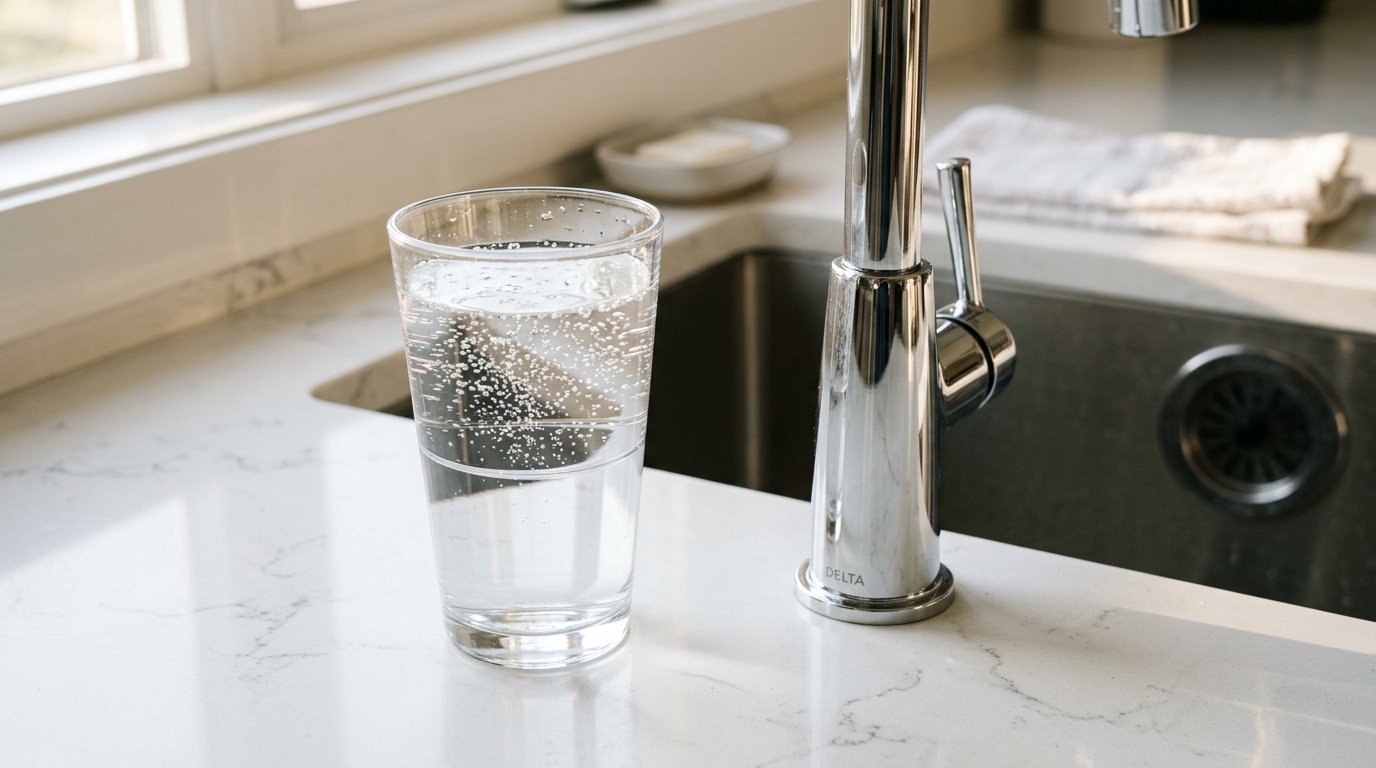
Why does my water look cloudy or milky when it first comes out of the tap? In most cases, that cloudy look is caused by tiny air bubbles trapped under pressure inside your plumbing pipes, which is completely harmless. When you turn on your faucet, the pressure drops, allowing the bubbles to rise and escape into the room. If you pour the water into a clean glass, you will usually see the cloudiness clear from the bottom upward within just a minute or two as the air leaves the water.
Seeing milky or foggy water stream out of your kitchen or bathroom faucet can feel alarming. Clean, fresh water is essential for drinking, cooking, and bathing, so any change in clarity naturally raises questions. Fortunately, cloudy tap water is one of the most common residential plumbing occurrences, and in many instances, it resolves itself without any danger to your health or plumbing system.
How to Perform the Clear-Glass Test at Home
Before assuming the worst about your water quality or plumbing lines, you can perform a quick, reliable evaluation right at your kitchen sink. All you need is a clean, clear drinking glass and a couple of minutes to observe.
- Fill the glass: Turn on the faucet that is producing the cloudy water and fill a clear glass to the brim.
- Set it on a flat surface: Place the glass on your countertop under good lighting.
- Watch the movement: Keep an eye on where the water begins to clear. Note whether the change happens from the bottom of the glass moving up toward the top, or from the top moving down.
- Check the bottom after three minutes: Look closely at the base of the glass once the water has rested.
Interpreting Your Results: Air vs. Sediment
The behavior of the cloudiness in the glass tells you almost everything you need to know about what is happening inside your water supply.
If the water clears from the bottom up: Your water is simply aerated. Water travels through municipal and home supply pipes under continuous pressure. Cold water can also hold more dissolved air than warm water. When that water exits the tap and enters the lower-pressure environment of your room, millions of micro-bubbles form and slowly float to the surface. As they rise, the bottom of the glass clears first, followed by the middle and top. Once the air escapes, the water is completely clear and safe to use.
If the water clears from the top down or stays murky: You are likely dealing with solid matter or mineral sediment rather than air bubbles. Heavier particles like sand, silt, rust, or calcium carbonate do not float to the top; instead, gravity pulls them down. If you notice tiny specks gathering at the bottom of the glass, or if the water stays cloudy even after several minutes, sediment is present in your plumbing line.
When Sediment Indicates a Plumbing Concern
While air bubbles are harmless, persistent sediment or cloudiness that settles to the base of your glass warrants attention. Over time, suspended particles can affect fixtures, reduce water pressure, and cause wear on household appliances.
- Water heater buildup: A primary source of tap sediment is the home water heater. Minerals naturally settle at the base of a storage tank over years of heating cycles. If this sediment accumulates, it can break loose and travel into your hot water lines, causing cloudiness or a gritty texture.
- Aging or corroding pipes: Older metal supply pipes can gradually corrode internally, releasing fine rust particles into the water flow.
- Municipal main line work or well disturbances: Nearby utility maintenance, fire hydrant testing, or shifts in well water levels can temporarily stir up fine silt that finds its way into home lines.
How Professional Plumbing Diagnosis Helps
When the glass test reveals settling particles, diagnosing the exact source prevents minor buildup from turning into bigger plumbing headaches. Pinpointing whether the issue originates in your water heater tank, your internal distribution pipes, or the incoming service line is precisely what a professional plumbing inspection accomplishes.
During a general plumbing evaluation, a technician can examine your water heater for mineral scale accumulation, inspect supply valves, test water flow at multiple fixtures, and evaluate the physical condition of your piping. If sediment has gathered in your water heater, a thorough system flush or component inspection can restore clean, consistent water flow throughout the house.
Get Reliable Plumbing Guidance in Jefferson City
If your home's water stays cloudy, leaves residue in your sink, or only turns milky when running hot water, The Drain Man Plumbing is here to help homeowners across Jefferson City, Tennessee, and the surrounding communities. Our general plumbing service is designed to evaluate your entire system, identify the root cause of water clarity issues, and recommend sensible solutions.
To schedule an evaluation for your home or speak directly with our team, contact The Drain Man Plumbing today by phone or submit a service request through our website.