
Water Heater Solutions
Why Is Your Hot Water Suddenly Scalding Hot? Causes and Safety Steps
When your tap turns dangerously hot regardless of how you turn the handle, here is what is happening and what you should do.
September 23, 2026
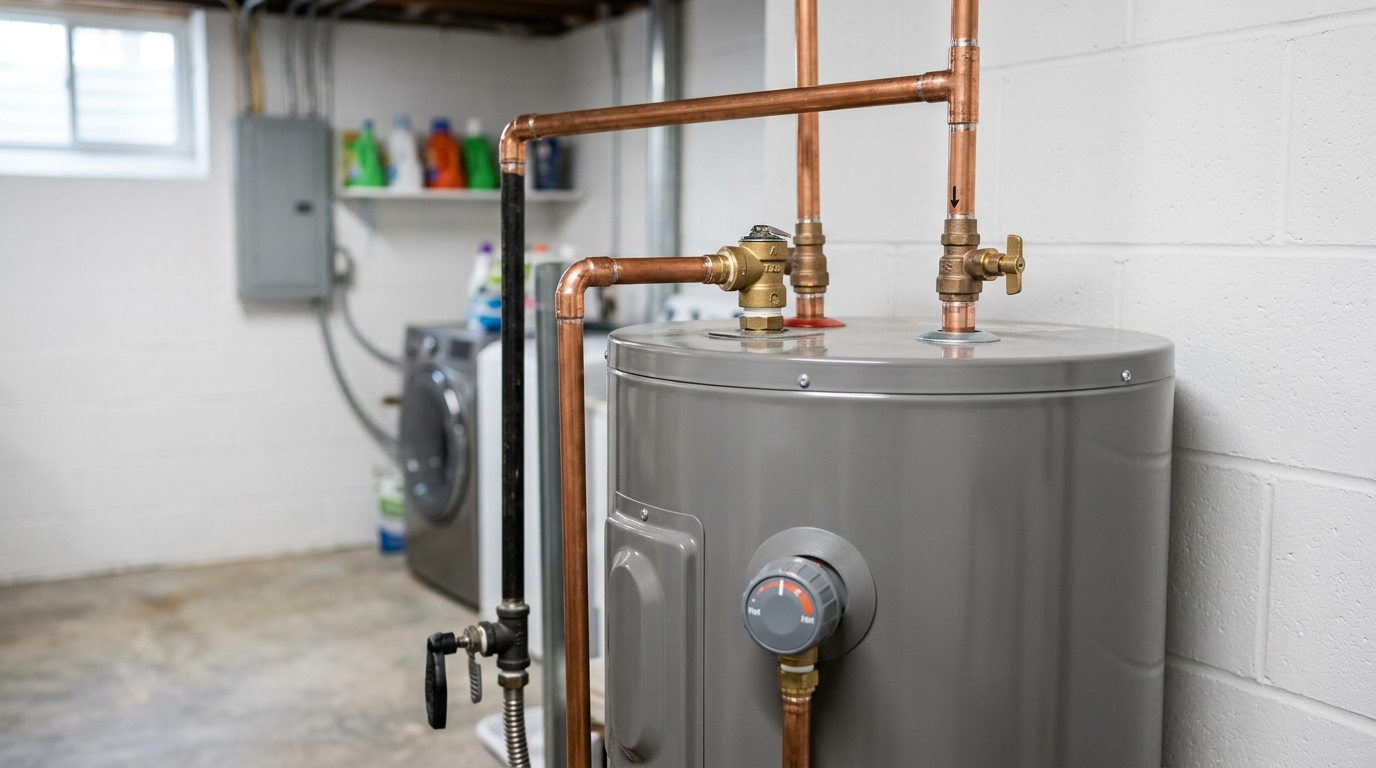
Why is my hot water suddenly scalding hot no matter how I adjust the faucet? Most of the time, this happens because your water heater’s thermostat is set too high or the thermostat inside the tank has stopped working properly. When a thermostat breaks, it can tell the heating elements to keep running non-stop, making the water inside the tank dangerously hot before it ever reaches your sink or shower.
Turning on the tap expecting a warm, comfortable stream and getting blast-furnace heat instead is both startling and dangerous. When water temperature spikes without warning, your plumbing system is signaling that something is interfering with normal temperature regulation. Before you try to take matters into your own hands, it helps to understand what is happening behind the scenes and what steps you can take safely.
What You Can Safely Check First
Before jumping to conclusions, you can perform a couple of simple, low-risk checks around your house to narrow down the source of the heat spike.
1. Test Multiple Fixtures in the House
First, test the water temperature at more than one faucet. Try the kitchen sink, a bathroom vanity, and a tub on a different floor or at the opposite end of the house. Turn the hot water on gently and check the temperature carefully using a cooking thermometer or by passing your hand quickly near the stream.
- If only one fixture is scalding hot: The problem may not be the water heater at all. It could be a failed mixing valve or cartridge inside that specific shower or faucet handle that is failing to blend cold water with hot water properly.
- If every fixture produces scalding water: You are dealing with a whole-house issue originating directly at the water heater.
2. Look at the External Temperature Setting
If you have a gas water heater, there is typically an external control knob on the gas control valve near the bottom of the tank. For standard residential use, manufacturers and safety organizations generally recommend a setting around 120 degrees Fahrenheit (often marked as "Normal" or "Warm"). Take a look at this dial to see if it was accidentally bumped or turned up to a higher setting.
Why You Should Not Open the Water Heater Tank Yourself
While checking a visible dial is fine, you should never attempt to open up electrical panels on an electric water heater or dismantle components on a gas unit. Water heaters operate with high voltages (often 240 volts) or combustible natural gas and propane lines. Working inside these access panels without professional training carries a real risk of severe electric shock, fuel leaks, or explosions.
Furthermore, an overheated tank contains water under extreme pressure. If internal safety controls are failing, loosening bolts or tampering with fittings can release boiling water and steam instantly, causing catastrophic burns.
The Real Safety Dangers of Scalding Hot Water
Water that reaches 140 degrees Fahrenheit can cause a serious third-degree burn in just five seconds. At 150 degrees, deep burns can occur in less than two seconds. This creates an immediate hazard in any home, but it is especially dangerous for:
- Young Children: Children have thinner, more sensitive skin that burns much faster than adult skin, and they may not react quickly enough to pull away from hot water.
- Older Adults: Seniors often have reduced skin sensitivity or slower reflexes, making it harder to notice extreme heat before tissue damage occurs.
- Anyone Showering: A sudden burst of near-boiling water while bathing can cause panic, slips, falls, and immediate physical injury.
Beyond the personal safety risks, continuously overheating water puts severe stress on your plumbing pipes, expansion tank, and the water heater itself, increasing the risk of burst lines or early tank failure.
Professional Diagnosis and Water Heater Repair
When an internal thermostat fails, the heating element simply will not shut off on its own. A professional plumber has the electrical testing tools, diagnostic equipment, and training to safely test upper and lower thermostats, inspect heating elements, evaluate the temperature and pressure relief (TPR) valve, and replace broken components.
This is exactly the type of issue handled by The Drain Man Plumbing's water heater installation and repair service. Our experienced plumbing team can accurately pinpoint whether your water heater needs a straightforward thermostat replacement, an electrical component repair, or a full system upgrade to restore safe, dependable hot water to your home.
Contact The Drain Man Plumbing Today
If your home's water is running dangerously hot, do not wait for someone in your family to get hurt. Protect your household by getting in touch with the local plumbing professionals in Jefferson City, Tennessee.
Reach out to The Drain Man Plumbing right away by calling our office directly or submitting a service request through our website to schedule your water heater inspection and repair.