
Water Quality & Hard Water
Why Does Hard Water Build Up So Quickly in East Tennessee Water Heaters?
Understand how regional limestone geology drives mineral buildup and impacts your home water heater.
October 2, 2026
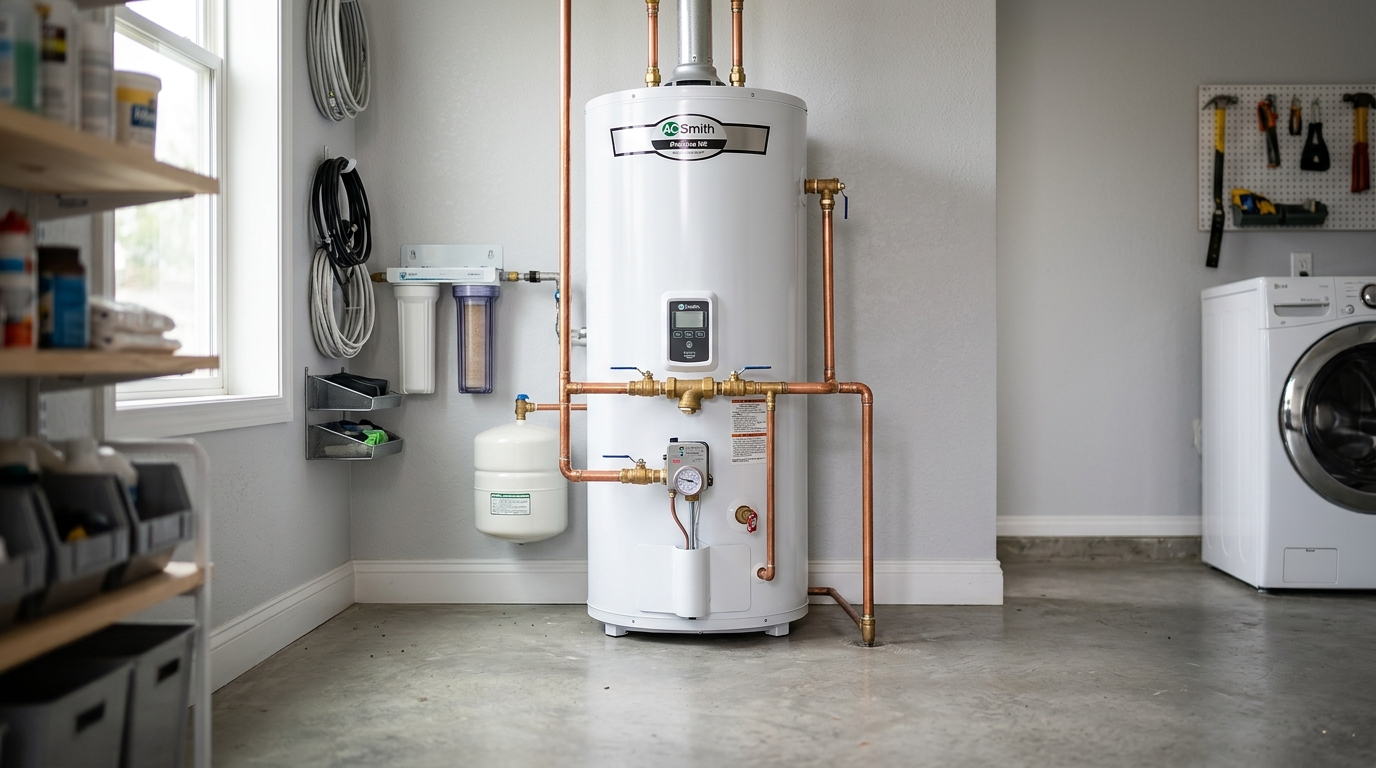
Have you ever wondered why limescale seems to accumulate so rapidly on your plumbing fixtures, faucets, and inside your home appliances here in East Tennessee? For many local homeowners, white mineral crust and rumbling water heater tanks are regular household concerns. The short answer lies right beneath our feet in the unique geology of the region, which directly influences groundwater chemistry and how our residential water heating equipment performs over time.
How Does East Tennessee's Geology Cause Hard Water?
East Tennessee sits within the Ridge and Valley physiographic province, a landscape defined by extensive formations of sedimentary rock—predominantly limestone and dolomite. These rock layers are rich in calcium carbonate and magnesium carbonate. Because rainwater is naturally slightly acidic, it dissolves these minerals as it percolates through the soil and porous limestone bedrock into local aquifers, springs, and municipal water sources.
By the time this groundwater reaches residential plumbing systems, it carries a high concentration of dissolved mineral ions. This dissolved mineral content is what defines hard water. While hard water is generally considered safe for everyday household use and consumption, its mineral composition presents distinct mechanical challenges once it enters closed plumbing fixtures—especially those designed to heat water.
How Does Hard Water Damage Home Water Heaters?
When hard water enters a water heater, a chemical reaction occurs as the water temperature rises. Heating forces dissolved calcium and magnesium out of solution, causing them to crystallize into solid mineral deposits known as limescale. Over time, this buildup affects both traditional storage-tank and modern tankless water heaters in several specific ways:
- Sediment Accumulation and Overheating: In standard tank water heaters, mineral flakes settle to the bottom. This creates a dense layer of sediment between the water and the burner or lower heating element. Because limescale acts as an insulator, the heating source must run longer and hotter to warm the water, which can cause metal fatigue, tank stress, and early failure.
- Heating Element Burnout: In electric water heaters, limescale coats the submerged heating elements directly. Trapped heat cannot dissipate into the water efficiently, causing the element to overheat and burn out prematurely.
- Tankless Heat Exchanger Restriction: In tankless units, narrow water passages inside the heat exchanger can quickly become coated with scale. This restricts water flow, reduces heat transfer efficiency, and can trigger system error codes due to internal temperature spikes.
- Kettling and Popping Sounds: Water trapped underneath hardened sediment at the bottom of a tank turns to steam and bubbles upward violently, creating a distinct popping or rumbling noise often referred to as 'kettling.'
- Reduced Hot Water Capacity: As mineral sediment fills the base of a tank, it takes up valuable space, gradually reducing the total volume of hot water available for daily household use.
How Homeowners Can Mitigate Hard Water Mineral Wear
Managing the effects of hard water requires consistent maintenance. Periodic water heater flushing removes loose sediment before it calcifies into a solid, immovable mass. In addition, checking the sacrificial anode rod helps ensure the tank remains protected against accelerated corrosion, while whole-home water conditioning solutions can reduce mineral accumulation across all household plumbing lines.
Understanding your home's water quality and appliance health is an essential step in preventing unexpected breakdowns. The Drain Man can help homeowners answer these questions by inspecting water heating systems, assessing mineral buildup, performing routine maintenance flushes, and recommending appropriate plumbing solutions tailored to local conditions. Contact The Drain Man Plumbing today to schedule an inspection and keep your home water heater running efficiently.