
Sink Repair
Why Your Faucet Handle Spins Freely (And How to Handle It)
Understand why your tap handle lost its grip, how to stop the running water right away, and what goes into a lasting fix.
August 16, 2026
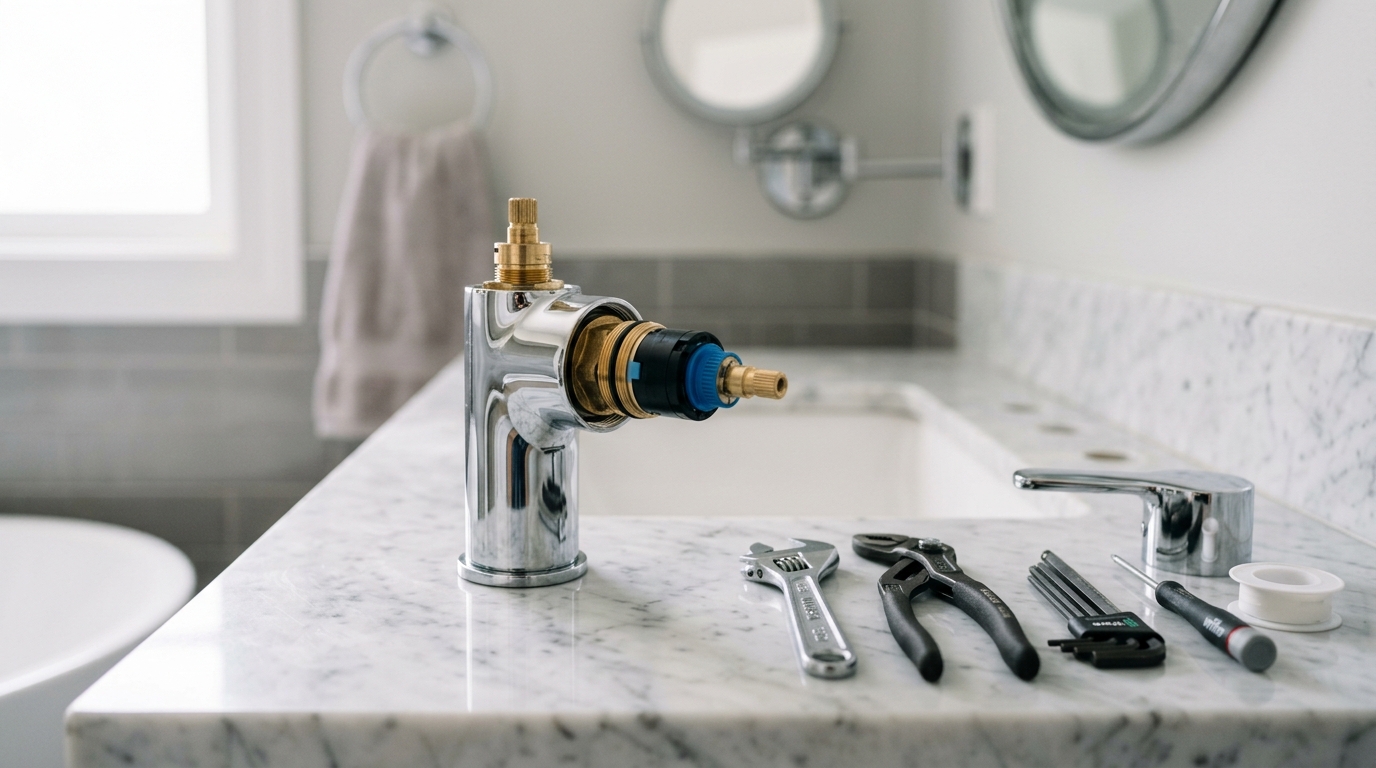
Why does my faucet handle spin freely without actually stopping the water? When your faucet handle turns round and round without shutting off the water, it usually means the cartridge or valve stem inside the handle has stripped or broken internally. Faucet handles attach to internal parts using tiny metal ridges called splines or flat locking edges. When everyday wear, age, or mineral deposits weaken these parts, the connection breaks down. As a result, the outer handle simply glides around in circles while the inner valve stays stuck wide open, leaving the water running.
Discovering that your sink handle has lost its grip can be frustrating, especially when water continues to stream into the basin. Before you begin worrying about long-term repairs, there is one immediate step you should take to protect your home and avoid wasting water.
The Critical First Step: Use the Under-Sink Shutoff Valve
When a faucet handle spins freely, your instinct might be to push down harder or wrench the handle with extra force. Doing this is one of the most common mistakes homeowners make. Forcing a stripped handle will not turn the internal valve, but it can crack the decorative handle casing, shear off small set screws, or twist the entire faucet assembly loose from the countertop.
Instead, follow this simple process to stop the water safely:
- Clear the cabinet: Open the cabinet doors beneath the sink and move cleaning supplies or storage bins out of the way so you have a clear view of the plumbing.
- Locate the fixture shutoff valves: Look for the small oval or lever-style handles connected to the flexible metal or plastic supply tubes leading up to your faucet. Most sinks have two: one for hot water on the left, and one for cold water on the right.
- Turn the valve clockwise: If your fixture uses standard multi-turn oval handles, rotate them gently to the right (clockwise) until they stop turning. If you have quarter-turn ball valves, turn the lever perpendicular to the pipe.
- Verify the water has stopped: Check the faucet spout to ensure the flow has completely ceased.
Using the dedicated shutoff under the sink isolates the broken fixture without forcing you to cut off water to the rest of your home. If the under-sink valves are stiff or difficult to turn by hand, never force them with excessive tool leverage, as older valves can weep if stressed.
Why Faucet Cartridges Fail and Strip
Modern residential faucets rely on compact internal components called cartridges or valve stems to regulate water volume and temperature. In cartridge-style faucets, moving the handle rotates or slides ceramic discs or rubber-sealed cylinders to line up water ports.
Over years of daily operation, two primary factors cause these assemblies to fail:
- Stripped connection splines: The tip of the valve stem has precise teeth that interlock with the inside of the handle. If someone turns the handle past its stopping point or applies uneven pressure, the softer metal inside the handle socket strips smooth against the harder stem.
- Mineral buildup and seizure: Hard water minerals like calcium and magnesium gradually collect inside the cartridge housing. When the internal mechanism binds up, turning the handle places enormous mechanical stress on the plastic or brass stem, causing it to snap cleanly inside the fixture body.
Why Replacing the Cartridge Is a Job for a Professional
While installing a new cartridge sounds like a straightforward task, repairing modern plumbing fixtures requires specialized tools and precision. Attempting a quick fix without the right background often leads to deeper plumbing complications.
Here is why professional sink repair makes a difference:
1. Identifying the Exact Replacement Part
There are hundreds of faucet manufacturers, and each brand utilizes dozens of proprietary cartridge designs that look nearly identical to the untrained eye. Installing a cartridge that differs by a fraction of a millimeter can cause slow internal leaks, erratic temperature mixing, or a handle that binds immediately.
2. Avoiding Supply Line Damage
Removing a seized cartridge often requires a dedicated cartridge puller tool. If a homeowner attempts to pry or twist a stubborn cartridge out using basic pliers, the rotational force can easily twist and buckle the soft copper water tubes hidden below the sink deck, turning a simple repair into a major replacement project.
3. Ensuring a Proper Seal
A successful repair involves thoroughly cleaning mineral buildup out of the faucet valve body, inspecting the brass housing for scoring or micro-cracks, and lubricating the new O-rings with food-grade silicone grease. A professional ensures the new cartridge seats perfectly so the handle operates smoothly and shuts off reliably every single time.
Reliable Sink and Faucet Repair in Jefferson City
This exact scenario is what The Drain Man Plumbing's sink repair service is designed to address. If you are dealing with a spinning handle, persistent drips, or stiff plumbing valves in your kitchen or bathroom, our team provides practical, professional solutions tailored to your home's needs.
Rather than wrestling with stuck parts or struggling to find matching replacement hardware, let our experienced team restore your fixture safely. Reach out to The Drain Man Plumbing today by phone or submit a service request through our website to schedule your residential sink repair with our friendly local technicians.