
Sink Repair
Why One Side of Your Double Kitchen Sink Drains and the Other Backs Up
Learn why one basin drains smoothly while the other clogs, what to inspect under the cabinet, and how to fix it safely.
August 18, 2026
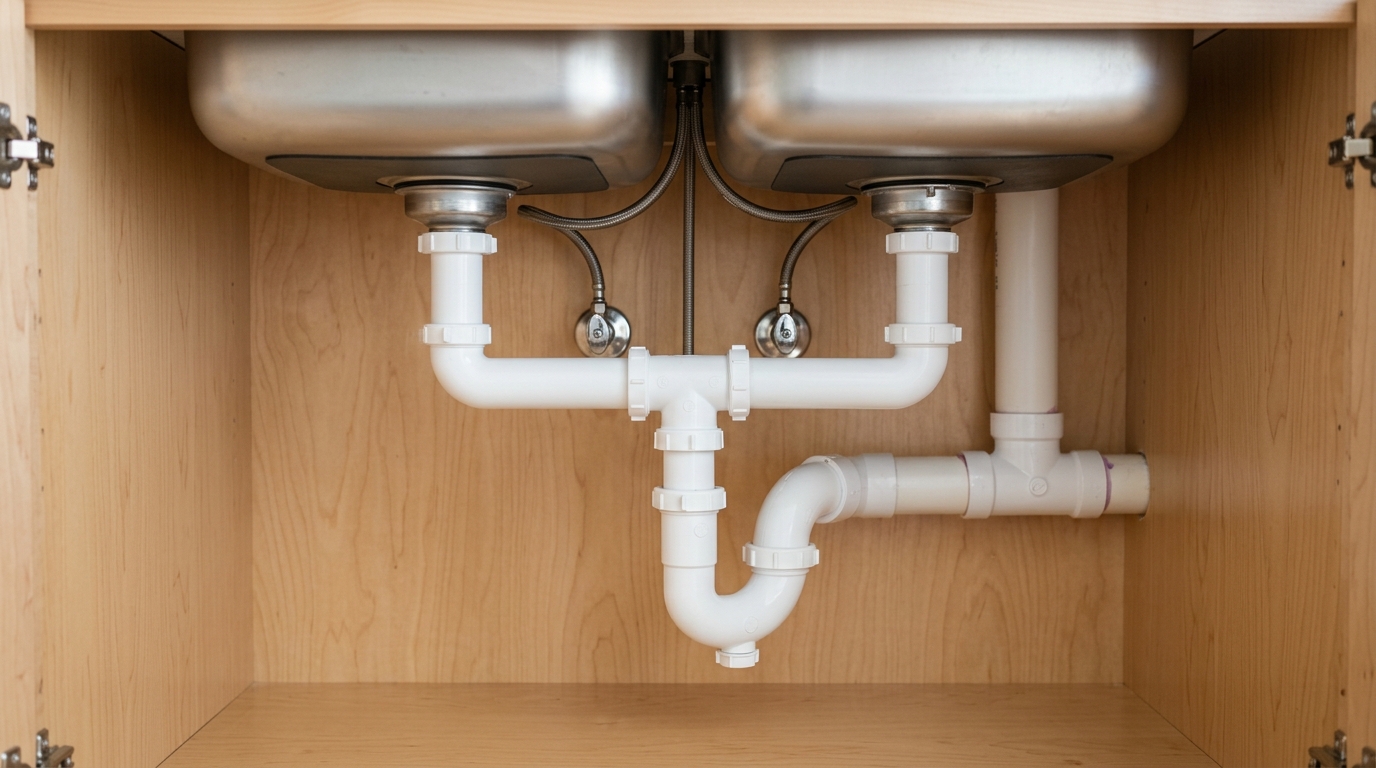
Why does my double kitchen sink drain fine on one side but back up on the other? When this happens, the problem is usually a clog located in the branch pipe attached only to that specific basin, or a connector pipe under the sink that is sagging out of place. Because both sink bowls connect to a single main drainage line lower down, clean water flowing freely on one side means your main house pipe is working, but water from the slow basin is getting trapped before it reaches that shared drain.
A double-basin kitchen sink is a great convenience for washing and prepping meals, but its drainage setup under the counter can be surprisingly sensitive. When standing water collects on one side while the other empties quickly, understanding how your plumbing connects helps you figure out the best way to handle it.
How Double Sink Drainage Works
In most double-basin installations, each side has its own drain strainer or garbage disposal unit. Below the basins, a horizontal connector pipe—often called a continuous waste arm—directs water from one side across to join the other side at a fitting called a tee. From that tee, combined wastewater flows downward through a single curved P-trap and into the home's drain pipe inside the wall.
Because the basins share the lower section of the plumbing, a blockage deep in your main drain line would cause both basins to back up simultaneously. When only one side refuses to drain, the issue is isolated to the plumbing components between that specific basin and the central junction point.
What to Check Under Your Kitchen Sink
Before reaching for any tools, clear out the cleaning supplies and items stored under your sink so you have a clear view of the drain assembly. Grab a flashlight and check the following areas:
- Look for a visibly sagging connector pipe: The horizontal pipe connecting the two basins needs a slight downward slope toward the central tee so water flows naturally via gravity. If the pipe has slipped or was installed with inadequate support, it can sag in the middle, creating an unintended belly where water, grease, and food debris sit and form a slow drain.
- Inspect for moisture or loose slip joints: Kitchen slip joints are held together with plastic or metal nuts and rubber or nylon washers. Check the joints around the connector arm and the tee fitting for active drips, mineral crusting, or loose connections.
- Check the garbage disposal (if equipped): If the slow side is the one with the disposal, food matter could be lodged in the grinding chamber or in the discharge elbow connected to the side of the unit.
How to Safely Plunge the Slow Basin
If the pipes look straight and secure with no obvious leaks, you can try clearing a minor buildup with a standard cup plunger. However, plunging a double sink requires a specific technique because the two drains are linked:
- Seal the working side: If you plunge the slow basin without sealing the open basin, the air and water pressure you create will simply shoot up and out of the opposite drain rather than pushing against the blockage. Place a tight rubber stopper or a wet rag firmly over the working drain, holding it down securely.
- Cover overflow openings: If your sink model features built-in overflow vents, cover them tightly with a damp cloth as well.
- Plunge with steady pressure: Fill the backed-up basin with an inch or two of water to create a seal around the plunger cup. Place the plunger directly over the drain opening and pump up and down firmly several times, then pull up sharply.
When to Stop Plunging and Call a Professional
While plunging can dislodge soft organic matter, it is not a permanent solution for structural pipe issues. If you have plunged the basin repeatedly with no improvement, or if water immediately backs up again the next day, continuing to force pressure through the system can cause problems.
Forceful, repeated plunging puts significant hydraulic stress on the slip joints under your sink. If a connector arm is already sagging or misaligned, aggressive plunging can blow the slip joint apart completely, dumping dirty wastewater directly into your cabinet base. Additionally, if the obstruction is dense grease, fibrous food waste, or a mechanical obstruction inside the baffle tee, plunging will not properly scour the pipe walls.
A sagging or chronically clogged connection requires a trained professional to disassemble the assembly, clear the branch arm completely, inspect the baffle tee for internal wear, and re-align and secure the piping with the proper pitch so water drains away effortlessly.
Professional Sink Repair in Jefferson City, Tennessee
Resolving misaligned slip connections, clearing persistent branch clogs, and properly pitching kitchen waste lines is exactly what The Drain Man Plumbing's sink repair service resolves. Our team diagnoses the exact point of restriction under your counter, restores correct water flow to both basins, and ensures all fittings are watertight and stable.
If you are dealing with a stubborn double sink backup in Jefferson City, Tennessee, contact The Drain Man Plumbing today by phone or submit a service request through our website to have a local plumber inspect and repair your kitchen drainage.