
Hydro Jetting
Why Do Multiple Toilets Gurgle at the Same Time?
What simultaneous bubbling toilets tell you about your home's main sewer line and how to solve it.
August 28, 2026
Why do multiple toilets in my house gurgle at the same time? When more than one toilet makes a bubbling or gurgling sound together, it usually means your home's shared main sewer line is partially blocked. Every drain, sink, tub, and toilet in your house feeds into this single primary pipe before heading out to the municipal sewer or septic tank. If that main line gets narrowed or clogged, air cannot flow through the plumbing vent system the way it is supposed to. As waste water tries to push past the restriction, trapped air gets forced backward through the water standing in your toilet bowls, disrupting the venting and drainage for the whole house at once rather than just one fixture.
Hearing an odd bubbling sound from a bathroom fixture can be confusing, especially when nobody is using that specific room. Because your entire plumbing network is interconnected, a symptom that shows up across multiple rooms is a clear signal that the underlying issue sits further downstream in the shared drainage system.
What to Pay Attention to When Toilets Start Gurgling
Before calling in professional help, taking note of exactly when and where the noises happen can provide valuable clues about what is happening underground. Homeowners can observe a few key patterns:
- Which fixtures make noise: Are both the upstairs and downstairs toilets bubbling, or is it confined to the lowest level of the home? Lower-level fixtures are often the first to show signs of a main line backup because they sit closest to the primary sewer pipe.
- What triggers the sound: Does the gurgling happen when you flush one toilet, or does it start when high-volume appliances run? If running the washing machine, taking a shower, or draining a bathtub causes a nearby toilet to burp air, water is struggling to exit through the main line quickly enough.
- Slow drainage in adjacent fixtures: Check if water takes longer to drain in nearby bathtubs, showers, or floor drains. If water begins rising in a shower pan when a toilet is flushed, the main pipe is actively backing up.
Why Treating Individual Toilets Will Not Work
When a toilet misbehaves, the natural instinct is to grab a plunger or reach for a store-bought drain cleaner. While a plunger works well when a single toilet has a localized clog right in its built-in trap, it cannot solve a house-wide venting and drainage issue.
Plunging one toilet simply shifts the trapped air and standing water around inside the network. It does nothing to relieve the obstruction sitting tens of feet away in your underground sewer lateral. Furthermore, chemical cleaners should never be poured down toilets, as they generate heat that can crack porcelain, damage old pipes, and fail to reach the actual site of a deep main-line blockage.
Because a shared main line problem impacts the entire building, attempting to fix fixtures one by one only wastes time while the blockage continues to collect debris and worsen.
What Causes Main Sewer Line Obstructions?
Main sewer lines handle heavy daily use, carrying thousands of gallons of water, organic waste, and paper products away from your home each month. Over time, several common culprits can narrow or obstruct this large underground pipe:
- Tree Root Intrusion: Tiny hairline root fibers can enter pipe joints seeking moisture and nutrients. Once inside, they grow rapidly, creating a net that catches toilet paper and solid waste.
- Fats, Oils, and Grease (FOG): Kitchen grease poured down sinks cools and solidifies along the interior walls of the sewer pipe, gradually shrinking the pipe's interior diameter.
- Mineral and Scale Buildup: Over years of service, cast iron and older drain lines can develop rough scale along the pipe walls, creating friction points where waste snags.
- Heavy Sediment and Sludge: Soap scum, hair, and silt combine into a dense sludge that settles at the bottom of pipes with low slope or older infrastructure.
How Hydro Jetting Clears the Entire Main Line
When dealing with a deep obstruction in your main drainage line, standard mechanical snaking or cable augers often punch only a small hole through the center of the clog. While this may temporarily restore some flow, it leaves the thick sludge, grease, and root rings clinging to the pipe walls, leading to recurring gurgles and clogs shortly after.
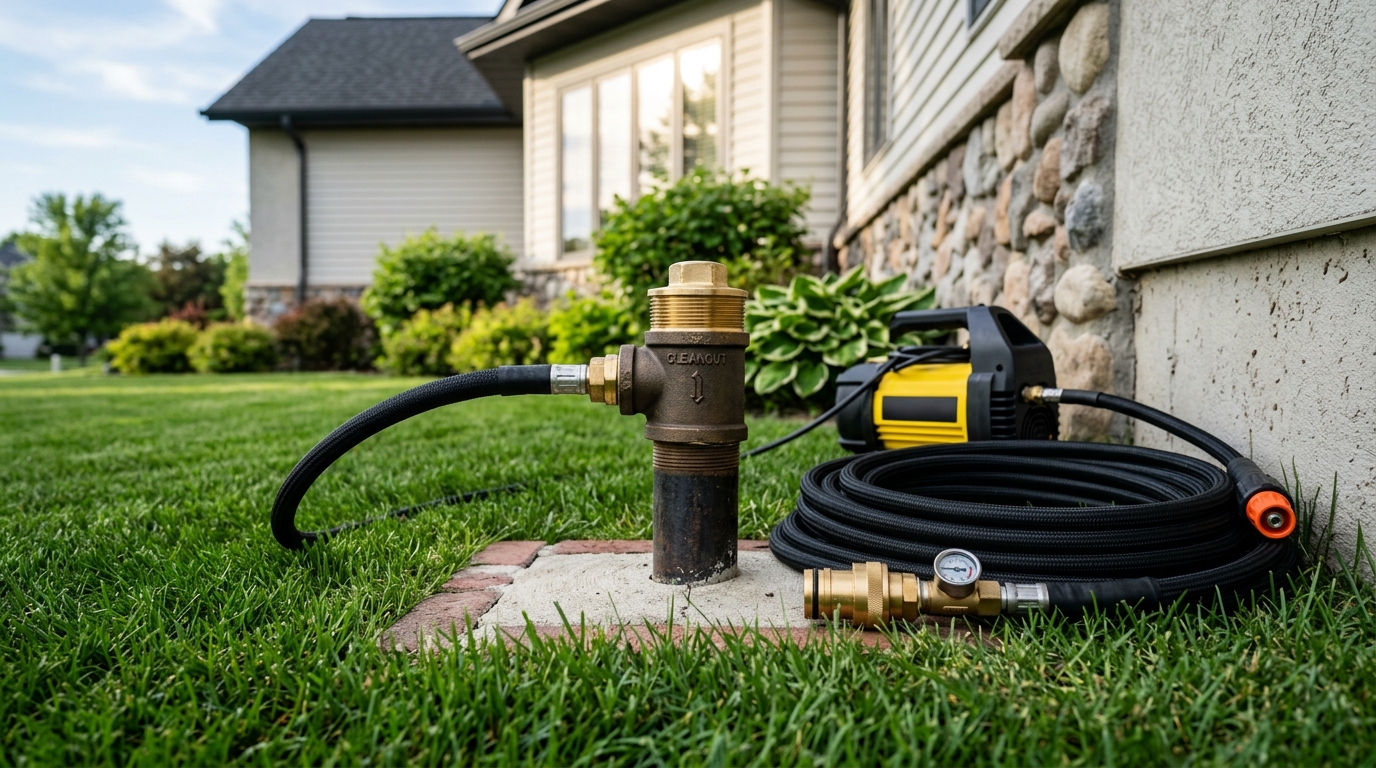
Hydro jetting provides a comprehensive, long-term solution. This process uses a specialized high-pressure water hose equipped with multi-directional nozzles. Inserted directly into your home's main sewer cleanout, the jetter propels itself through the full length of the main line. It delivers powerful streams of water that scour the entire 360-degree interior circumference of the pipe.
Hydro jetting breaks up thick root masses, strips hardened grease from pipe walls, and washes accumulated sediment completely out of your system. It restores the pipe back to its full flow capacity so that air can circulate freely through the vent stacks and waste water can exit without building backpressure.
Get Your Home's Drains Flowing Smoothly Again
This thorough, whole-pipe restoration is exactly what The Drain Man Plumbing's hydro jetting service is designed to address. By clearing the full length of your primary sewer line, our team helps eliminate simultaneous toilet gurgling, slow drains, and recurring plumbing headaches for homeowners across Jefferson City, Tennessee.
If you are noticing gurgling toilets, slow drains, or strange drainage noises throughout your house, reach out to The Drain Man Plumbing today. Give us a call directly to schedule a professional line inspection and discuss how our hydro jetting service can get your plumbing system running cleanly and quietly.