
Drain Cleaning
Why Your Basement Floor Drain Backs Up When It Rains
How to inspect your drain, clear simple clogs, and know when you need professional drain cleaning before the next storm.
September 18, 2026
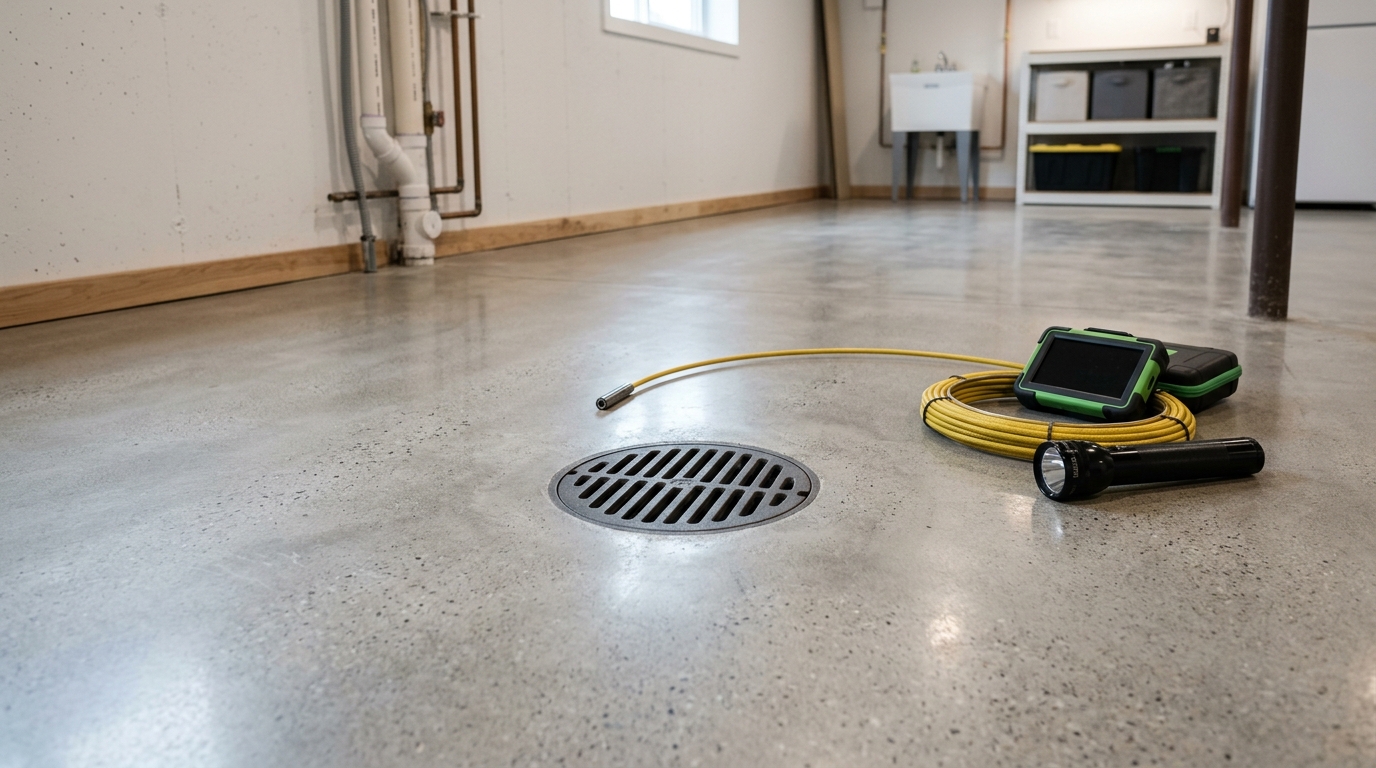
Why does my basement floor drain back up when it rains hard?
When it rains heavily, a lot of extra water flows into the ground and through municipal or residential drainage systems. If dirt, lint, sediment, or grease have built up inside your floor drain and its U-shaped trap, water cannot move through the pipe fast enough. The pipe gets choked, and the backed-up water rises out of the drain and onto your basement floor.
How Your Basement Floor Drain Works During a Storm
Basement floor drains are designed to handle incidental water from water heaters, laundry units, condensation lines, and routine floor cleaning. Beneath the metal or plastic cover sits a trap—often shaped like a U or a P—that holds a small amount of standing water. This water barrier keeps sewer gases from entering your home while allowing incoming liquid to pass freely into the main drainage line.
During a heavy storm, your home's drainage network faces increased pressure. Even if stormwater does not run directly into your sanitary sewer, saturated ground around your foundation and higher volume throughout the neighborhood main can reduce overall drain speed. When your drain line is already narrowed by years of accumulated debris, it simply cannot process the sudden surge of water, leading to a frustrating backup.
Steps You Can Take to Check and Clean the Drain Yourself
Before assuming the worst about your underground pipes, there are a few practical maintenance checks you can perform safely at home.
1. Remove and Clean the Drain Grate
The surface grate catches large debris, but it also collects hair, lint, and dust swept across the basement floor. Use a screwdriver to remove the screws holding the grate in place, or gently pry it up if it is a snap-in style. Scrub the grate with a stiff brush and warm water to remove sticky grime that may restrict surface flow.
2. Inspect the Visible Trap Opening
Shine a bright flashlight straight down into the exposed drain opening. You should see standing water in the trap. Put on a sturdy pair of waterproof gloves and look for any physical obstructions sitting near the top of the trap, such as small objects, leaves, or dense clumps of lint. Carefully remove any visible buildup by hand or with a small retrieval tool.
3. Flush the Drain with Clean Water
Once you have removed surface debris, slowly pour a five-gallon bucket of clean water into the drain. Observe how quickly the water drains away. If the water spirals down smoothly without rising toward the rim of the pipe, you have restored basic flow at the surface level.
When Recurring Backups Mean It Is Time for Professional Help
If you have cleared the grate and the top of the trap, but the next heavy downpour still pushes water back into your basement, the restriction lies deeper in the line. Continually mopping up dirty water after every storm only addresses the symptom, not the cause.
A recurring backup during heavy rain points to deeper issues inside the pipe, such as:
- Heavy Mineral and Sludge Buildup: Over time, soap residue, silt, and scale stick to the pipe walls, turning a four-inch pipe into a narrow passage.
- Tree Root Intrusion: Tiny tree roots find micro-cracks in underground drain lines seeking moisture, creating a web that catches solid matter and blocks surge flow.
- Main Line Obstructions: A restriction in the primary building sewer line will often show up first at the lowest point in the house—your basement floor drain.
At this stage, plunging or pouring store-bought chemical cleaners down the pipe will not solve the problem and can damage older plumbing materials. The drain line requires a thorough professional clearing paired with a high-definition sewer camera inspection. A camera inspection sends a specialized fiber-optic lens through the pipe, showing the exact location, type, and severity of the blockage so it can be cleared correctly.
How The Drain Man Plumbing Solves Floor Drain Issues
This type of deep pipe cleaning and diagnostic inspection is precisely what The Drain Man Plumbing provides for homeowners in Jefferson City, Tennessee. Our residential drain cleaning service focuses on restoring full pipe capacity rather than offering temporary fixes.
Using professional-grade drain clearing equipment, we remove tough blockages, root intrusions, and built-up residue from the length of your line. We verify the condition of your pipes with video diagnostics so you know the line is clear, sound, and ready to handle sudden water surges when weather conditions change.
Protect Your Basement Before the Next Downpour
You should not have to worry every time a storm forecast appears. If your basement floor drain struggles to keep up with heavy rain, get ahead of the issue before the next storm system hits East Tennessee. Reach out to The Drain Man Plumbing by phone or submit an appointment request through our website to schedule a comprehensive drain inspection and cleaning for your home.