
Emergency Plumbing Advice
Where Is Your Main Water Shut-Off Valve, and What Should You Do If a Pipe Bursts?
A Step-by-Step Homeowner Guide to Locating Your Main Shut-Off Valve and Responding to a Burst Pipe Emergency
October 10, 2026
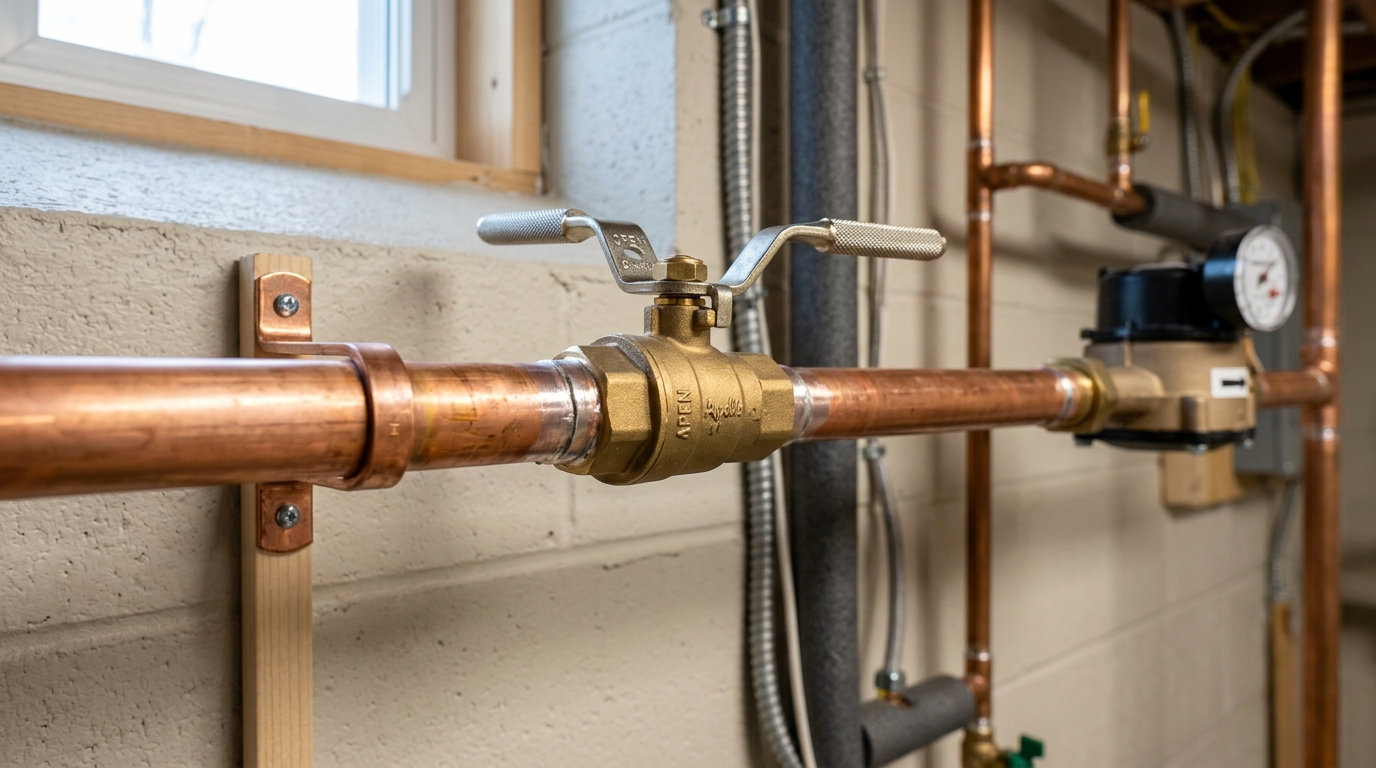
When a pipe suddenly bursts, water can flood into your home at an alarming rate, threatening floors, walls, and personal belongings within seconds. In this high-stress moment, knowing the exact steps to take—starting with where to find your main water shut-off valve—can prevent catastrophic structural damage. Do you know where your main shut-off valve is located right now, and would you know what to do if water started pouring through your ceiling?
Where Is My Main Water Shut-Off Valve Located?
Finding your main water shut-off valve quickly is the single most important factor in limiting water damage during a plumbing crisis. The location of this valve varies depending on your home’s age, foundation type, and local climate.
Here are the most common places to find your residential main water shut-off valve:
- In the Basement: In homes with basements, the valve is typically located near the front foundation wall facing the street. Look down near floor level where the main water line enters through the concrete wall or floor.
- In the Crawl Space: If your home sits on a crawl space, the shut-off valve is often positioned along the front wall where the supply pipe enters. In some setups, an access hatch inside a nearby closet or utility area provides direct reach to the valve.
- In a Utility Closet or Near the Water Heater: In homes built on a concrete slab, the main line often enters through the ground into a utility closet, the laundry room, or right next to the water heater.
- In an Attached Garage: In warmer regions or modern slab homes, the valve may be located inside the garage, often low on an exterior wall or next to the water heater.
- In an Exterior Meter Pit (Curb Box): In some properties, the primary shut-off is located outside near the street or property line in an underground meter box with a metal or heavy plastic lid. Operating this valve may require a specialized meter key.
How Do I Operate the Shut-Off Valve?
Once you locate the valve, determine which type you have:
- Ball Valve (Lever Handle): Turn the lever 90 degrees so that it sits perpendicular (crosswise) to the pipe. When the handle is across the pipe, the water flow is completely stopped.
- Gate Valve (Round Wheel Handle): Turn the round wheel clockwise (to the right) until it stops turning completely. Avoid using excessive force, as older gate valves can seize or strip if overtightened.
What Should I Do First If a Pipe Bursts in My Home?
When dealing with an active pipe break, every second counts. Following a structured sequence protects your home’s structural integrity and keeps your household safe.
Step 1: Shut Off the Main Water Supply
Immediately go to your main shut-off valve and turn the water off completely. Stopping the pressurized flow at the source prevents hundreds of gallons of water from flooding your living spaces.
Step 2: Depressurize the Plumbing System
After closing the main valve, water remains trapped under pressure inside your supply lines. Open the lowest cold water faucets in your home (such as a basement sink or an outside hose bib), as well as faucets on the upper floors. This drains remaining water downward and relieves pressure, stopping residual leaks at the burst point.
Step 3: Address Electrical Hazards Safely
If standing water reaches electrical outlets, appliances, or your circuit breaker panel, do not step into the water. If you can access your main electrical breaker safely without entering wet areas, shut off power to the affected rooms to eliminate shock hazards.
Step 4: Protect Your Possessions and Remove Standing Water
Move furniture, rugs, electronics, and valuables away from the flooded area. Use towels, mops, or a wet/dry vacuum to begin extracting standing water. Improving ventilation by opening windows or running fans helps accelerate drying and reduce moisture buildup.
Step 5: Document the Damage
Take clear photos and videos of the damaged pipe, standing water, wet walls, ceilings, and affected personal property before extensive cleanup begins. This documentation is vital when filing a homeowner insurance claim.
Step 6: Contact a Professional Plumber
A burst pipe requires professional repair or replacement to ensure the integrity of the plumbing system. Attempting temporary patches on damaged copper, PEX, or CPVC piping can lead to recurring failures behind walls or under floors.
How The Drain Man Can Help
Locating your main shut-off valve, assessing pipe wear, and resolving sudden water line breaks require reliable plumbing expertise. The Drain Man can help homeowners identify their main shut-off points during routine maintenance inspections, repair cracked or ruptured supply lines, and install modern, reliable quarter-turn ball valves for hassle-free shut-offs in the future. Contact The Drain Man today to schedule an inspection or get dependable plumbing repair for your home.