
Hydro Jetting
What to Expect During a Hydro Jetting Service at Your Home
Clearing stubborn pipe buildup cleanly, safely, and with minimal disruption to your day.
August 27, 2026
Is hydro jetting messy or disruptive to have done at my house?
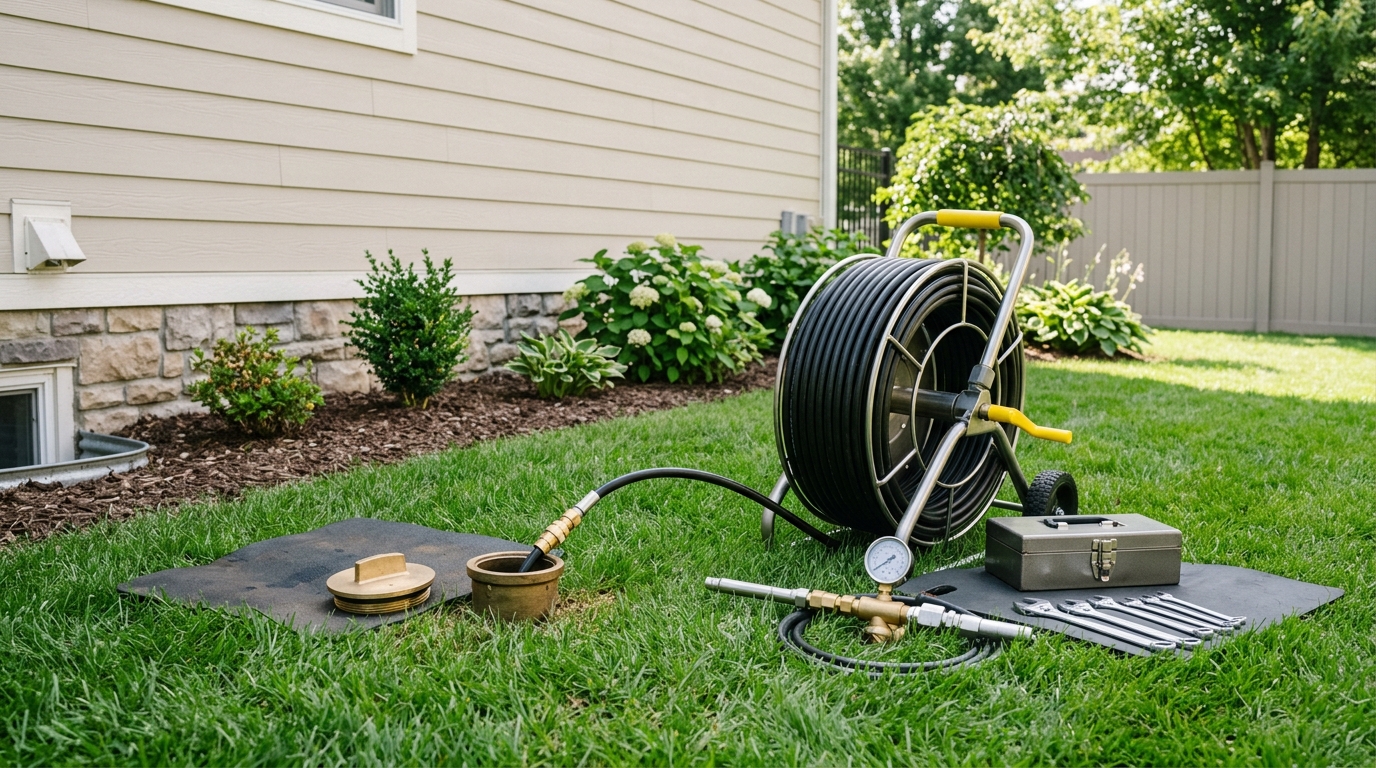
The short answer is no, it is not messy at all. When homeowners hear that we use high-pressure water to scour pipe walls, they often picture water spraying around their bathroom or a loud, messy crew in their living room. In reality, hydro jetting is a very contained and tidy process. A technician inserts a specialized, flexible hose directly into an existing plumbing opening called a cleanout, which is usually located outside in your yard, in a garage, or in a basement. The water pressure stays entirely inside the underground pipe, washing debris down the line without splashing into your home or disturbing your living space.
How the Process Works on Service Day
Knowing what will happen during a plumbing appointment can take the stress out of your day. When a technician arrives to perform hydro jetting, the process follows a calm, structured sequence designed to protect your home and solve the blockage completely.
1. Locating and Accessing the Cleanout
Your main sewer line or secondary drain lines usually have cleanout ports—capped pipes that provide direct access to the interior of your plumbing system. The technician will locate the most appropriate cleanout, remove the cap, and position the jetting equipment nearby. Because this access point is already built into your plumbing, there is no need to cut into walls or dig trenches in your yard.
2. Camera Inspection
Before turning on the water pressure, a technician will often run a small, illuminated camera down the line. This allows them to see the exact cause of the slow drain or backup—whether it is accumulated kitchen grease, mineral scale, toilet paper buildup, or invasive tree roots. Checking the pipe beforehand also confirms that the line is structurally sound and ready for cleaning.
3. The Jetting Process
Once the line is inspected, the technician inserts the hydro jetting nozzle into the cleanout. The machine pumps water through the nozzle at controlled pressures, spraying backward to pull the hose forward while scouring grease, sludge, and debris off the inner pipe walls. The water and dislodged debris simply flow away through the municipal sewer or septic system.
4. Final Verification
After completing the run, a follow-up camera check is typically performed to make sure the pipe is completely clear from wall to wall. The technician packs up the hoses, replaces the cleanout cap securely, and leaves the area just as clean as they found it.
How Long Does It Take?
For a standard residential sewer main or stubborn drain, hydro jetting typically takes between one and two hours from start to finish. The exact time depends on the length of the pipe run and the severity of the buildup. Because the equipment is contained and operates from an exterior or utility access point, you can go about your normal daily routine at home while the work is being done.
What You Don't Need to Do to Prepare
Many homeowners worry that they need to spend hours getting ready for heavy-duty plumbing work. For hydro jetting, your preparation is minimal:
- You do not need to dig up your yard: The work is done through existing access caps.
- You do not need to clear out your living areas: Unless the cleanout is located in an indoor utility closet or basement, technicians rarely need to bring heavy hoses through your main living spaces.
- You do not need to shut off your main water supply beforehand: The technician will manage all necessary water connections and controls.
The only helpful step you can take is ensuring that the path to your outdoor cleanout or basement utility area is reasonably clear of patio furniture, vehicles, or stored boxes so the equipment can be moved into place smoothly.
Matching the Tool to the Problem: Hydro Jetting vs. Snaking
Hydro jetting is a powerful maintenance method, but it is not always the first step for every plumbing problem. A simpler drain cleaning method, such as mechanical snaking (or cabling), uses a rotating steel cable to punch a hole through an immediate clog, such as an isolated hair tangle or a foreign object trapped in a trap.
While snaking is great for quickly restoring flow through a soft blockage, it does not clean the sides of the pipe. Over years of use, grease, soap scum, and hard water minerals coat the interior of the pipe, gradually narrowing its diameter and catching paper products. Hydro jetting is the right call when a line suffers from chronic, repeated backups, heavy grease accumulation, or thick scale buildup. It does not just poke a hole through the stoppage—it restores the pipe closer to its original internal diameter.
Routine and Professional Pipe Care
Hydro jetting is a standard, routine service that The Drain Man Plumbing performs safely every week for homeowners across Jefferson City, Tennessee, and the surrounding areas. With the right equipment and experienced hands, clearing your main sewer line or heavy drain buildup is clean, fast, and completely manageable.
If your home is dealing with slow-draining fixtures, gurgling pipes, or recurring line backups, get in touch with The Drain Man Plumbing. Give our local office a call or submit a service request through our website to discuss your home's plumbing and get your drains running freely again.