
Water Heater Solutions
Tankless vs. Traditional Water Heaters: Which Is Right for Your East Tennessee Home?
Compare energy efficiency, space requirements, and hot water demand to find the ideal water heater for your household.
October 6, 2026
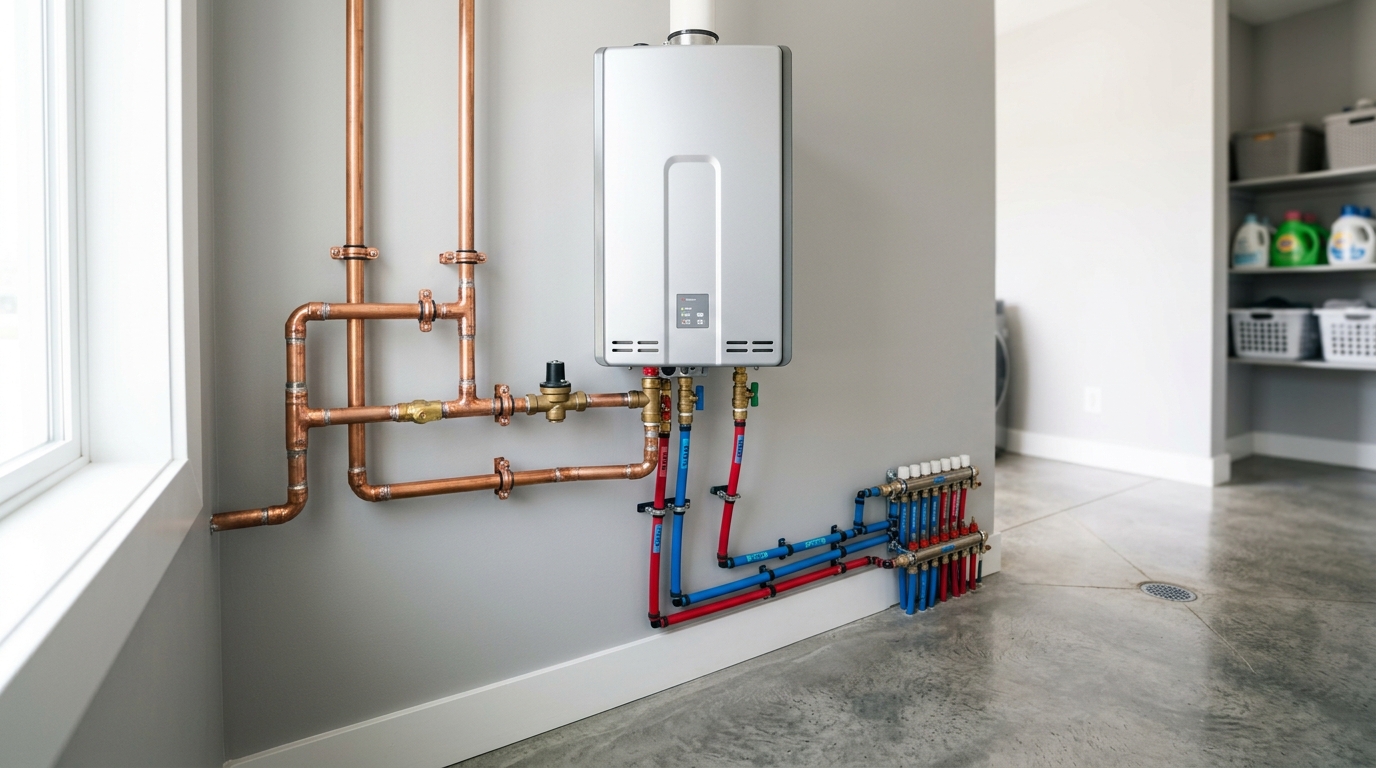
When your water heater begins to age or fails to keep up with your household's daily routine, you face an important decision: should you replace it with a traditional storage tank unit or upgrade to a modern tankless system? For homeowners in East Tennessee, selecting the right water heater requires weighing upfront installation considerations against long-term energy use, available utility connections, and family demand.
The Core Question: Tank or Tankless?
Which water heating system provides the best balance of reliable comfort, energy efficiency, and overall value for your East Tennessee residence? The answer depends on how your household uses hot water, the physical layout of your home, and your available utility infrastructure.
Understanding Traditional Storage Tank Water Heaters
Traditional water heaters store and continuously heat a dedicated reservoir of water—typically between 40 and 80 gallons—in an insulated tank. The burner or electric heating element turns on periodically to maintain a set temperature so hot water is ready when you open a tap.
- Initial Investment: Storage tank systems generally have a lower purchase and installation cost, making them a practical choice for direct replacements where existing venting and plumbing lines are already in place.
- Familiar Operation: These units are straightforward to operate and maintain, with widely available parts and established replacement procedures.
- Space and Standby Loss: Tank units occupy substantial floor space in a basement, garage, or utility closet. Because they continuously keep water hot, they experience standby heat loss during periods of non-use.
- Capacity Limits: Once the stored hot water is exhausted, the household must wait for the tank to refill and recover before hot water is available again.
Understanding Tankless On-Demand Water Heaters
Tankless water heaters do not store hot water. Instead, cold water flows through a high-powered heat exchanger (powered by natural gas, propane, or electricity) only when a hot water tap or appliance is turned on, heating the water instantaneously.
- Endless Hot Water: As long as the demand stays within the unit's gallons-per-minute (GPM) flow rating, a tankless system can provide continuous hot water without running out.
- Compact Footprint: Tankless units mount directly onto an interior or exterior wall, freeing up valuable square footage in utility rooms or storage areas.
- Longer Service Life: With proper routine maintenance, tankless systems often outlast standard tank models, reducing the frequency of total system replacements.
- Installation Requirements: Transitioning from a tank to a tankless system may require upgrades to gas lines, specialized venting, or additional electrical capacity to support peak heating demands.
East Tennessee Household Considerations
When comparing systems for homes in the region, keep several local and structural factors in mind:
- Groundwater Temperatures: Winter temperatures in East Tennessee lower incoming groundwater temperatures. Tankless units must work harder to raise cold water to a comfortable temperature, meaning proper GPM sizing is essential to handle simultaneous showers and appliances.
- Fuel Sources: High-demand tankless units often perform best on natural gas or propane. If your home is all-electric, your electrical panel capacity must be evaluated before installing an electric on-demand model.
- Water Quality and Maintenance: Mineral deposits can accumulate in both system types. Tankless units require annual descaling flushes to maintain efficiency and protect heat exchangers from scale buildup.
How The Drain Man Can Help You Decide
Determining whether a traditional tank or a tankless water heater is right for your home comes down to evaluating your physical space, utility setup, and daily hot water usage. The Drain Man Plumbing can help homeowners answer these questions by assessing your current plumbing system, calculating your peak hot water demand, and presenting practical, reliable solutions tailored to your property.
If you are planning a water heater replacement or want to explore your options for an upgrade, contact The Drain Man Plumbing today to schedule a professional consultation and find the perfect fit for your home.