
Water Heater Solutions
Why Is There a Puddle Under My Water Heater? Steps for Jefferson City Homeowners
How to inspect water heater puddles safely, pinpoint the source of the leak, and determine if you need a replacement.
September 26, 2026
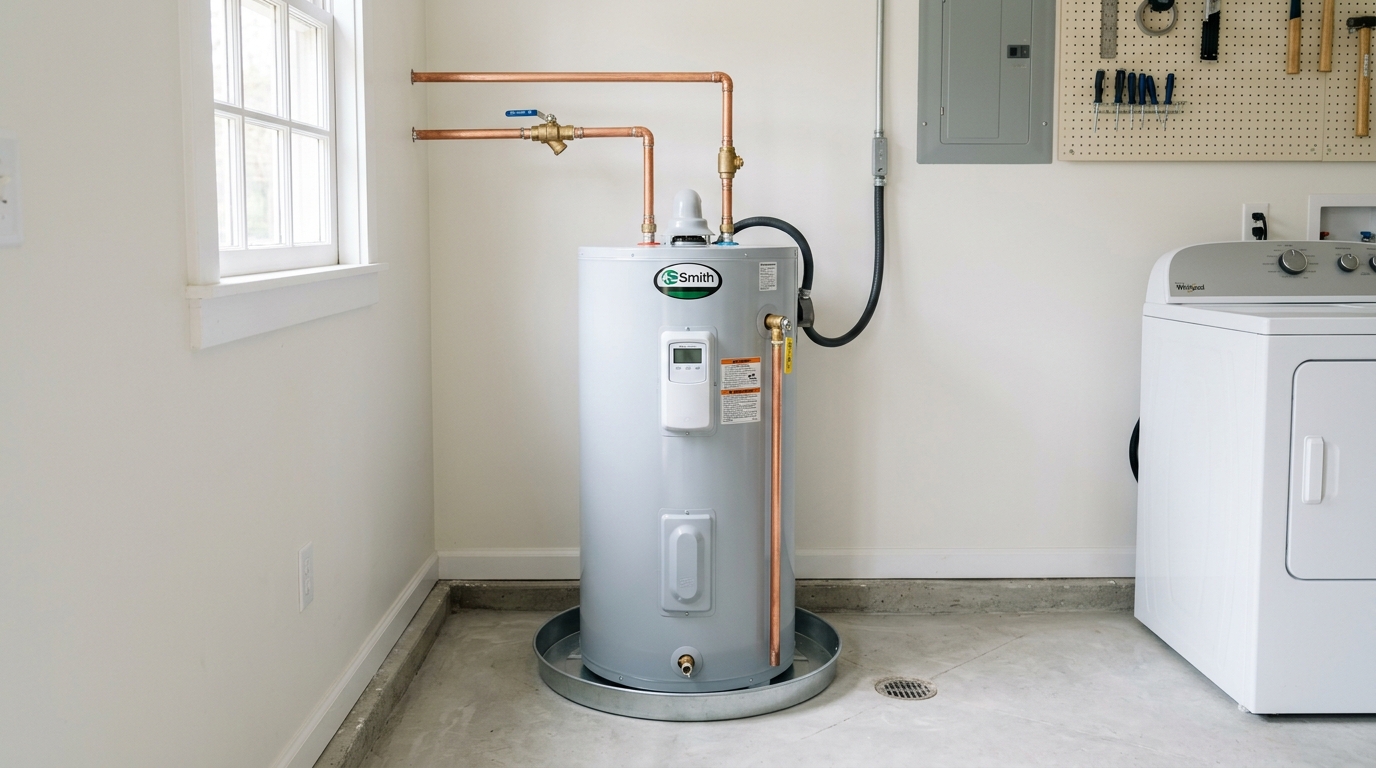
Why is there a puddle forming under my water heater? Finding water pooled around the base of your unit usually comes down to a few common causes. In some cases, it is a minor issue that is easy to manage, such as a loose drain valve or water discharging from the temperature and pressure relief valve. In other cases, the puddle signals a serious problem, like the internal steel tank rusting through. Learning where the water is coming from helps you figure out if you need a straightforward fix or a full system replacement.
A puddle beneath a water heater should never be ignored. Even a slow drip can cause subfloor damage, encourage mold growth, or suddenly turn into a major plumbing failure that floods your utility space. Before you start poking around your unit, take a methodical approach to figure out what is happening while keeping safety your top priority.
Important Safety Precautions First
Before you inspect the puddle or touch any component on your water heater, evaluate the immediate surroundings for safety risks:
- Check for gas odors: If you have a gas water heater and notice the distinct smell of sulfur or rotten eggs, leave the area immediately. Do not flip light switches, use a phone in the room, or attempt to inspect the unit. Contact your gas utility provider and a professional plumber from a safe location.
- Beware of electrical hazards: For electric water heaters, standing water touching electrical panels or wiring creates a shock hazard. If standing water has reached electrical components, shut off power to the unit at your main electrical service panel first.
- Do not touch scalding surfaces: Water stored inside residential water heaters is hot enough to cause severe burns. If you see steam or water spraying from fittings, keep your distance.
What You Can Safely Check Right Now
If there is no gas smell and no electrical danger, you can safely perform a few quick checks to locate the source of the water.
1. Dry the Area Completely
Use old towels or rags to thoroughly dry the floor around the base of the tank, the drip pan, and the exterior of the tank itself. Drying the area creates a clean baseline so you can watch where new drops or trickles appear.
2. Check the Drain Valve
Near the bottom of your water heater, you will find a small brass or plastic valve designed for attaching a garden hose. Inspect this valve closely:
- Look for active dripping from the spout or around the valve stem.
- If you have a dry hand, gently check whether the valve handle is fully closed and snug.
- Do not force or overtighten plastic valves, as brittle plastic can snap easily.
3. Inspect the Temperature and Pressure (T&P) Relief Valve
The T&P relief valve is located near the top of the tank or on the side, connected to a discharge pipe running downward. This safety device opens to release water if internal pressure or temperature exceeds safe operating limits. Check whether the end of the discharge pipe is wet or actively dripping. A release here could indicate high water pressure, an overheating thermostat, or a failing valve mechanism.
4. Watch to See if the Puddle Returns
After drying the unit, leave the area and return in twenty to thirty minutes. Check whether moisture is gathering along overhead pipe fittings, running down the exterior jacket, coming out of the relief line, or seeping directly out from underneath the bottom casing.
When a Leak Means the Tank Has Failed
If you have ruled out the overhead plumbing fittings, the T&P discharge pipe, and the drain valve, and water continues to pool from underneath the unit, the internal tank itself is likely compromised.
Traditional storage water heaters consist of a heavy steel tank lined with a protective glass coating. Over years of constant heating, cooling, and mineral exposure, sediment settles at the bottom. Eventually, internal corrosion eats through the steel walls. Once the tank body rusts through, it cannot be patched, welded, or repaired. A leaking tank body means the unit is reaching the end of its operational life and requires prompt replacement before the vessel ruptures entirely and spills dozens of gallons across your floor.
Water Heater Replacement from The Drain Man Plumbing
When your water heater shows signs of internal failure, acting quickly prevents costly water damage to drywall, framing, and personal belongings. Replacing an aging, failing water heater also restores steady hot water performance and improves energy efficiency throughout your household.
This is precisely what The Drain Man Plumbing is equipped to resolve. We provide thorough water heater installation and replacement services throughout Jefferson City, Tennessee, and surrounding communities. Our plumbers handle every step of the process, including safely draining and removing your damaged unit, positioning the new system, and ensuring all water, gas, or electrical connections adhere strictly to current plumbing codes.
Reach Out to Our Team Today
If you discovered a puddle beneath your water heater and need an honest, professional assessment, get in touch with The Drain Man Plumbing right away. You can call our Jefferson City office directly or submit a service request through our website contact page to schedule a water heater evaluation or replacement at your convenience.