
Tennessee Seasonal Plumbing
How to Prevent Frozen Crawl Space Pipes During an East Tennessee Cold Snap
Practical steps to protect unheated crawl space plumbing when Appalachian winter temperatures plummet.
October 1, 2026
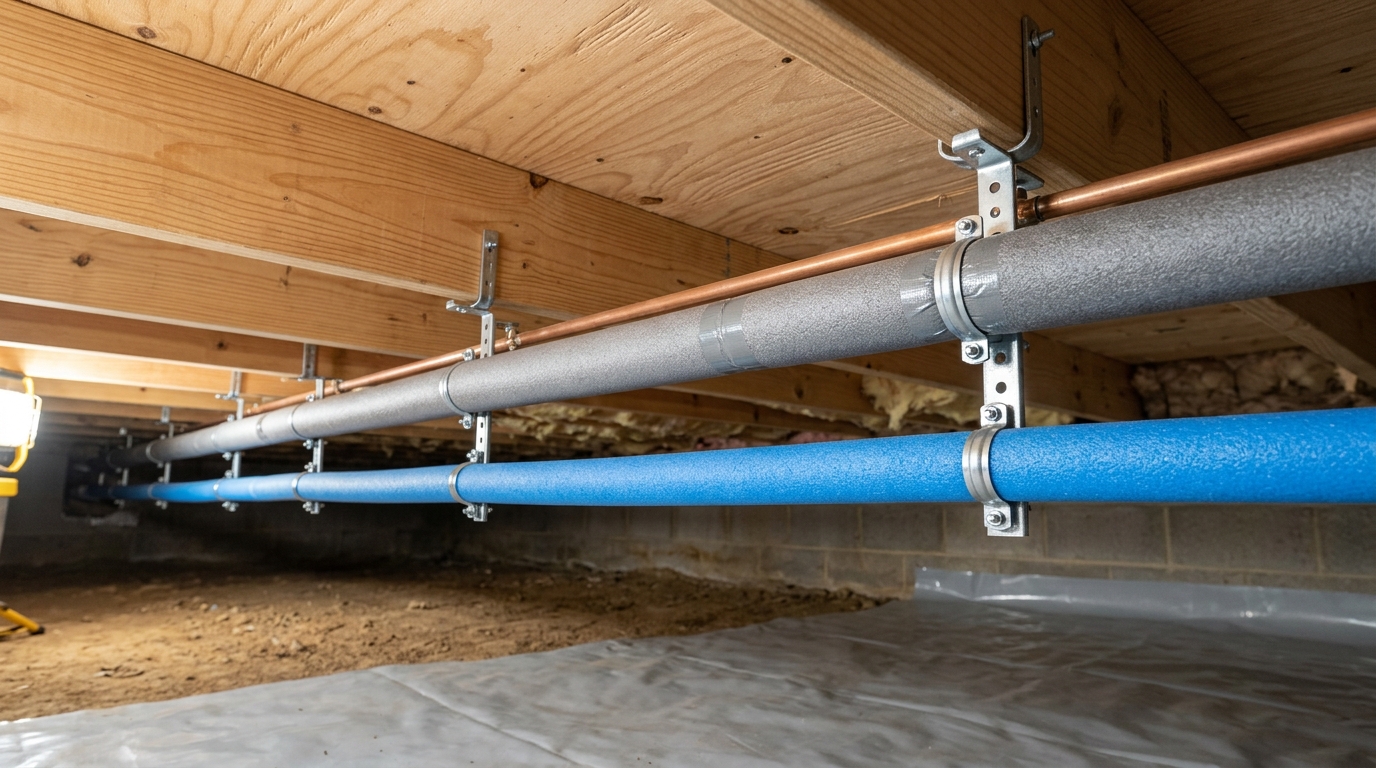
When a sudden winter weather front pushes across the Appalachian Mountains, temperatures in East Tennessee can drop from mild to well below freezing in a matter of hours. For many local homeowners, this raises an urgent question: How do I prevent my pipes from freezing in an unheated East Tennessee crawl space during a winter snap?
Because crawl spaces are open to outdoor ambient air and sit directly above cold ground, the plumbing lines beneath your subfloor are particularly vulnerable when arctic air arrives. Taking proactive steps can help you safeguard your residential plumbing system before the freeze sets in.
Why East Tennessee Crawl Spaces Are at High Risk
Unlike homes built on heated basements or slabs, crawl space foundations elevate the home above the earth, creating an open chamber where cold air can circulate. During an East Tennessee cold snap, ambient freezing air and high winds enter through foundation vents, gaps around exterior penetrations, and loose access doors. Copper, PEX, and CPVC supply lines routed through these unheated zones can quickly drop below 32 degrees Fahrenheit, leading to freezing and potential pipe failure.
Steps to Protect Your Crawl Space Pipes
To keep water flowing safely through your plumbing system during an intense freeze, implement the following protective measures:
1. Seal Foundation Vents and Gaps
Cold drafts are the primary reason crawl space pipes freeze quickly. Before temperatures fall below freezing, close your crawl space foundation vents or insert insulated vent covers. Inspect the perimeter for open gaps around cable entry points, hose bibb penetrations, or damaged crawl space doors, and seal them to keep sub-freezing winds from blowing directly over your pipes.
2. Install Pipe Insulation
All exposed water supply lines in an unheated crawl space should be protected with high-density foam or fiberglass pipe insulation. Ensure the insulation fits snugly around elbows, tees, and joints without leaving gaps where cold air can penetrate. In exceptionally exposed areas, pipe heating cables (heat tape) rated for residential plumbing can provide supplemental warmth when installed according to manufacturer instructions.
3. Allow a Controlled Trickle of Water
When sub-freezing conditions are at their peak, keeping water in motion makes it harder for ice blockages to form. Turn on a faucet served by the crawl space lines—such as a kitchen or bathroom sink—to a slow, steady drip of cold water. Even a minimal flow relieves pressure in the system and draws slightly warmer water from the main underground supply.
4. Open Cabinets Along Exterior Walls
Plumbing lines that run up from the crawl space into exterior walls or under-sink cabinetry benefit from interior heat. Open the cabinet doors beneath sinks to allow warm room air to circulate around the supply lines, especially overnight when household water use drops.
How The Drain Man Plumbing Can Help
Properly winterizing crawl space plumbing requires careful evaluation of pipe routing, insulation condition, and vulnerable air pathways. The Drain Man Plumbing helps East Tennessee homeowners answer these questions by inspecting crawl space supply lines, identifying vulnerable plumbing sections, and recommending practical solutions to keep your system safe throughout the winter months.
Contact The Drain Man Plumbing today to schedule an inspection of your home's crawl space plumbing and prepare your system for the winter season.