
General Plumbing Repair
Why Your Kitchen Faucet Sprayer Stopped Working (And How to Fix It)
Simple steps to diagnose low pressure or no water flow from your side sprayer or pull-down wand.
August 23, 2026
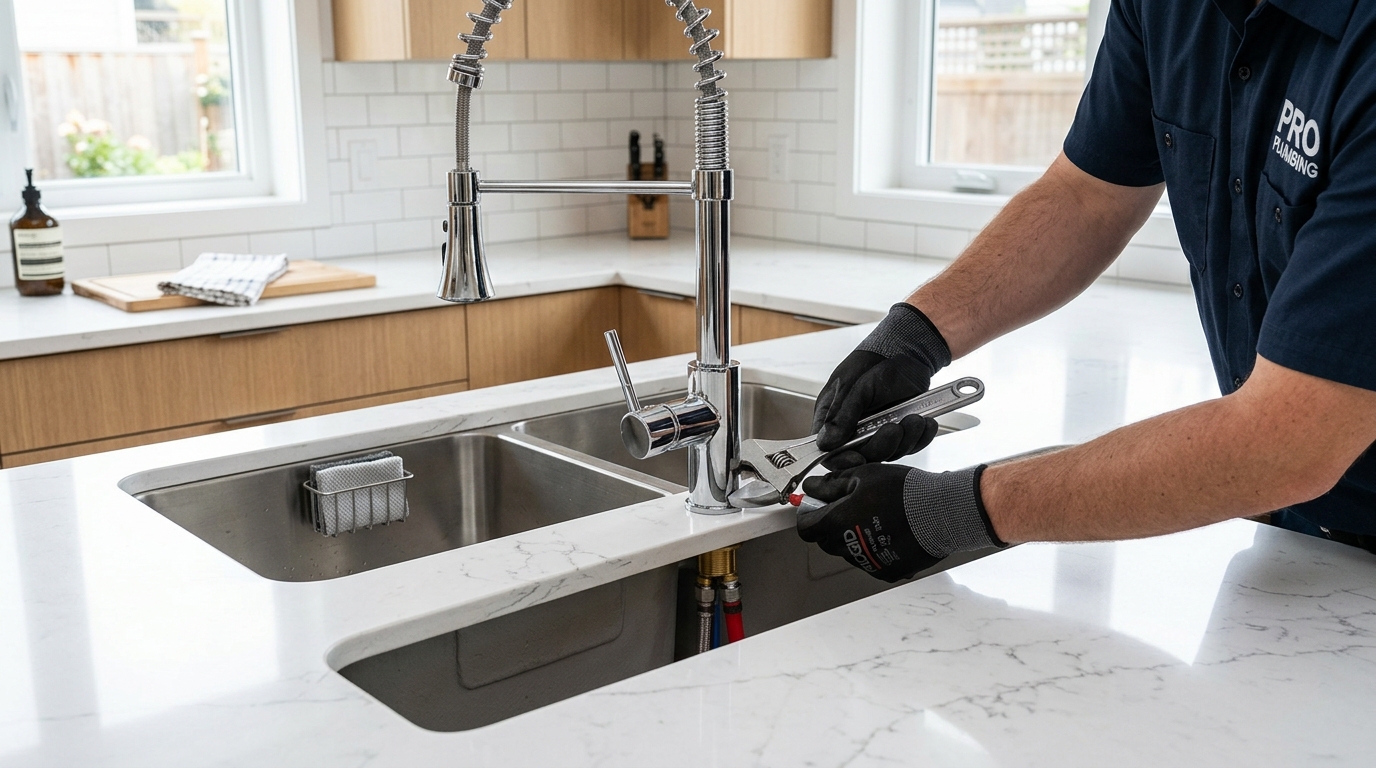
Why does my kitchen faucet's sprayer stop working even though the regular faucet still works fine? In most cases, the problem comes down to either a kink in the sprayer hose under the sink or a clogged diverter valve inside the faucet body. When water flows easily out of the spout but barely trickles from the sprayer, the faucet itself is getting plenty of water, but something is blocking the path to the spray head.
A kitchen sprayer is one of the handiest tools at the sink, whether you are rinsing fresh vegetables or washing heavy dinner pans. When you pull the trigger and get only a weak stream or nothing at all, it can throw off your daily kitchen routine. Fortunately, diagnosing the issue is straightforward once you understand how the system routes water.
How a Kitchen Faucet Sprayer Works
To understand why the sprayer stops functioning, it helps to look at the basic plumbing mechanics. Modern kitchen faucets with sprayers—whether they have a separate side sprayer or a pull-down head integrated into the spout—rely on a small internal component called a diverter valve. When the regular faucet is running, water naturally exits through the main aerator. When you squeeze the handle on the sprayer, the sudden drop in pressure causes the diverter to shift, redirecting the stream away from the spout and through the sprayer hose instead.
Because the main spout and the sprayer share the same hot and cold supply lines, a problem limited only to the sprayer means the water supply to the sink is fine. The disruption is happening somewhere along the line after the water enters the faucet base.
Step 1: Check Under the Sink for a Tangled or Kinked Hose
The simplest and most common cause of a failing sprayer is a physical obstruction beneath the cabinet. The flexible hose that feeds the sprayer drops down into the cabinet space before looping back up to the fixture.
Over time, items stored under the sink can interfere with this hose. Cleaning spray bottles, dish soap refills, trash bins, or even the drain pipes themselves can catch the hose and bend it sharply. A sharp bend or kink cuts off water flow just like stepping on a garden hose.
To check this:
- Clear out the cabinet under your sink so you have a clear view of the plumbing lines.
- Locate the braided or rubber hose connected to the sprayer assembly.
- Follow the entire length of the hose with your hand, feeling for sharp twists, pinches, or places where it is snagged on supply valves or drain pipes.
- Straighten the hose out and test the sprayer again while watching beneath the sink to ensure it moves freely without catching.
Step 2: Clean Out Mineral Deposits in the Spray Head
If the hose is completely straight and flexible, the next place to look is the spray head itself. Water naturally carries dissolved minerals like calcium and magnesium. Over months and years, these minerals form hard, crusty deposits inside the tiny spray nozzles and the internal screen of the sprayer.
You can safely clean these deposits at home using ordinary white household vinegar:
- For a side sprayer: Many side spray heads unscrew directly from the hose fitting. Unscrew the head by hand (or gently with a cloth-wrapped pair of pliers) and place it in a small bowl filled with warm white vinegar for two to three hours.
- For a pull-down wand: You can unscrew the wand from the flexible hose, making sure to hold onto the hose with a clip or your hand so it does not retract back inside the faucet neck. Soak the wand in vinegar, or fasten a plastic bag filled with vinegar around the head using a rubber band.
- After soaking, use an old toothbrush to scrub away the loosened scale, rinse the head thoroughly with clean water, reattach it, and test the flow.
When the Problem Is Inside the Diverter Valve
If the hose is free of kinks and the spray head is completely clear of mineral scale, the issue almost certainly lies inside the faucet body at the diverter valve. Diverter valves contain small springs, seals, and plastic gates that can wear out, get jammed with sediment, or seize entirely over time.
Fixing or replacing a diverter valve requires disassembling the main faucet housing. This means shutting off the water supplies, removing the handle, taking out the cartridge, and extracting the diverter mechanism without scratching the finish or damaging the delicate internal brass and copper seatings. If the diverter is stuck or broken, attempting to force it out without the proper tools can crack the internal waterways, turning a minor repair into a complete faucet replacement.
Because of the precision required, diverter repair and internal cartridge service are best left to a skilled professional plumber.
Sink and Faucet Repair in Jefferson City, TN
If your kitchen sprayer has lost its power or stopped working altogether, The Drain Man Plumbing is ready to help. Our sink repair service covers everything from clearing stubborn mineral clogs and untangling internal plumbing lines to replacing worn diverters, cartridges, and entire faucet assemblies.
We proudly serve homeowners throughout Jefferson City, Tennessee, providing practical, dependable residential plumbing solutions to keep your kitchen running smoothly. For assistance with your kitchen faucet or any other sink issues, reach out to The Drain Man Plumbing by phone or send us a message through our website contact form to schedule an appointment with our team.