
Hydro Jetting
Is Hydro Jetting Safe for Old Cast Iron Pipes? What Homeowners Need to Know
Learn how professional inspection and proper pressure settings protect vintage plumbing during deep drain cleaning.
August 29, 2026
Can old cast iron pipes still be hydro jetted safely?
Yes, hydro jetting can safely clean old cast iron pipes, as long as an experienced technician uses the right pressure settings and proper nozzle tips. Cast iron is a sturdy material, but decades of contact with water and waste can cause the interior walls to wear down, flake, or become brittle over time. When handled by a knowledgeable professional, hydro jetting clears out built-up grease, mineral scale, and intrusive tree roots while protecting the line. However, using the wrong equipment or turning the water pressure too high on an aging pipe can cause structural damage or punctures.
Understanding Cast Iron Pipes in Residential Plumbing
Cast iron was the standard material for residential sewer and drain lines for much of the twentieth century. It was prized for its strength, quiet operation, and long service life. Even today, many homes built before the 1980s still rely on their original cast iron infrastructure.
Over decades of service, cast iron goes through a natural aging process known as tuberculation. Minerals in the water and acidic waste react with the iron, forming rough, crusty deposits along the inside walls of the pipe. This rough interior catches debris, hair, cooking grease, and toilet paper, gradually reducing the inner diameter of the drain line. In addition, shifting soil and searching tree roots often exploit the joints between cast iron pipe segments. While standard snaking can poke a temporary hole through a soft clog, it usually leaves hardened scale and root rings behind.
What Homeowners Can Find Out Ahead of Time
Before scheduling any significant drain cleaning service, it helps to gather a few basic facts about your home’s plumbing system. You do not need to be a plumbing expert to uncover valuable details that will help your service technician:
- Approximate Age of the Home: If your home was constructed before the mid-1980s and has not had a full sewer line replacement, there is a strong chance you have cast iron or clay drain lines underground.
- Visible Pipe Materials: Check unfinished areas like basements, crawlspaces, or utility rooms. Cast iron pipes are typically dark gray or black, thick-walled, and feature raised seams or hub-and-spigot joints where sections connect. In contrast, newer replacement sections are often white (PVC) or black (ABS) plastic.
- History of Drain Issues: Note whether your drains back up frequently, if multiple fixtures drain slowly at the same time, or if you have previously had tree roots removed from the main line.
Knowing this information helps set expectations, but you do not have to guess the exact state of your buried pipes on your own.
Why a Thorough Inspection Must Come First
Because cast iron ages from the inside out, a pipe that looks solid from the outside could have significant interior corrosion or thinning along the bottom channel (often called the pipe invert). Scheduling hydro jetting without inspecting the pipe first is like prescribing treatment without a proper diagnosis.
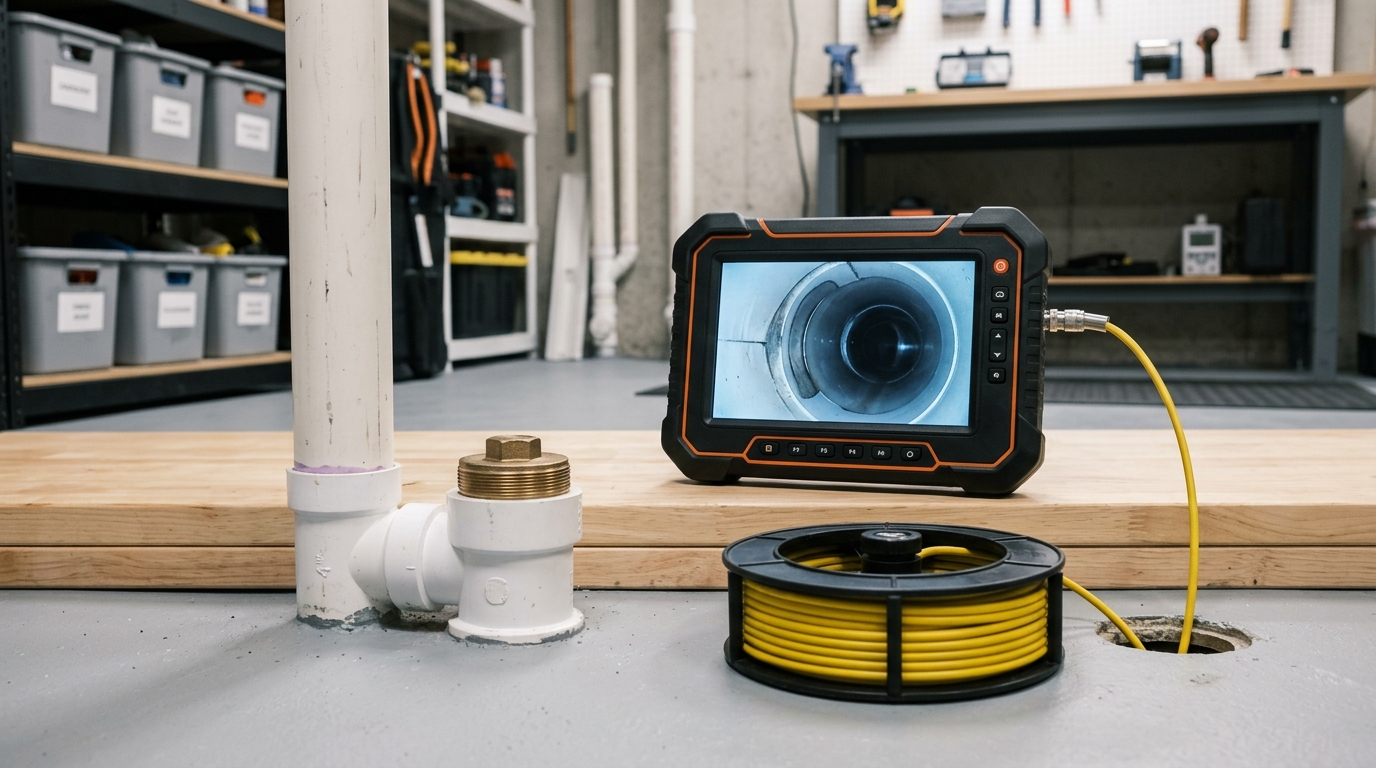
A professional sewer camera inspection should always precede hydro jetting on older lines. During this process, a specialized, high-resolution waterproof camera is guided through the pipe to provide a real-time view of its interior condition. This visual check allows the technician to confirm several critical factors:
- Structural Soundness: Verifying that the pipe walls are thick and intact enough to handle pressurized water cleaning.
- Nature of the Blockage: Determining whether the restriction is caused by soft sludge, hardened mineral scale, collapsed pipe sections, or heavy root growth.
- Location of Vulnerabilities: Identifying any existing cracks, holes, offset joints, or separated connections that require repair rather than high-pressure cleaning.
How The Drain Man Plumbing Keeps Your Pipes Safe
At The Drain Man Plumbing, we evaluate pipe condition first so hydro jetting is done safely on any pipe material, including older cast iron. Our process never involves a one-size-fits-all approach. By taking the time to inspect the line with advanced diagnostic tools, we ensure that your plumbing system gets the precise care it needs without unnecessary risk.
When our team determines that your cast iron pipe is a good candidate for hydro jetting, we carefully select the appropriate water pressure level (measured in PSI), water volume (GPM), and specialized nozzle style. Forward-facing and rear-facing water jets are calibrated to strip away interior scale and flush out debris smoothly, restoring the pipe’s flow capacity while preserving the structural integrity of the line.
Schedule Your Drain Evaluation Today
If you are experiencing sluggish drains, recurring clogs, or gurgling sounds in an older home, find out what is going on inside your pipes before a minor issue turns into a major backup. Contact The Drain Man Plumbing in Jefferson City, Tennessee, by calling our local office or submitting a service request through our website to schedule a comprehensive sewer line inspection and cleaning assessment.