
Emergency Plumbing Advice
Is a Slab Leak an Emergency? Signs, Risks, and How to Protect Your Home
Learn how to identify hidden leaks beneath your concrete foundation and why prompt intervention protects your home's structure.
August 1, 2026
Is a slab leak actually an emergency, or can it wait for a regular appointment? A slab leak happens when a water pipe breaks or leaks underneath your home's concrete foundation. Yes, you should treat it as an emergency. Even though a slab leak is often less dramatic-looking than an overhead burst pipe spraying water into a room, it is quietly running beneath your floor at all times. Leaving water flowing under your concrete slab washes away supporting dirt and damages the foundation of your house. Addressing it quickly stops small plumbing leaks from turning into serious structural repairs.
Why Slab Leaks Pose a Serious Hidden Threat
Most modern residential foundations are built as concrete slabs poured directly over prepared soil. The main water supply lines—both hot and cold—often run directly beneath or inside this concrete. Because these pressurized pipes are completely out of view, a pinhole leak, crack, or joint failure can flow for weeks or months before visible water surfaces inside your living space.
Unlike an exposed pipe under a kitchen sink where a drip bucket provides a temporary stopgap, water escaping under concrete has nowhere safe to go. It saturates the sub-base beneath your home, alters the soil density, and creates hydrostatic pressure against the underside of the foundation. Treating a suspected slab leak with urgency is the most effective way to prevent widespread structural and finish damage.
Warning Signs Every Homeowner Should Watch For
Because slab leaks hide below inches of concrete and finished flooring, detecting them relies on observing indirect symptoms throughout the house. If you notice one or more of the following signs, take them seriously:
- Unexplained Warm Spots on the Floor: If you walk barefoot across tile, vinyl, or carpet and feel a noticeably warm area that stays warm consistently, a hot-water supply line under the slab is likely leaking. The escaping hot water heats the concrete slab from beneath, radiating warmth upward through the floor.
- A Sudden Jump in Your Water Bill: A pressurized line leak runs continuously, 24 hours a day. Even a minor pinhole leak can waste thousands of gallons of water over a billing cycle. If your household water usage habits have not changed but your monthly utility statement spikes, a hidden leak is a prime suspect.
- The Sound of Running Water When Fixtures Are Off: When your home is quiet, listen carefully near bathrooms, laundry areas, or hallways. If you hear a faint hissing, trickling, or rushing sound while every faucet, toilet, and appliance is completely shut off, water is actively moving through a pipe somewhere in the system.
- Cracking in Flooring or Baseboards: Excess moisture and shifting subsoil can cause sections of your foundation to settle unevenly. This movement transfers stress into the interior of your home, resulting in cracked floor tiles, warped hardwood planks, separated baseboards, or new hairline cracks running along lower drywall seams.
- Dampness, Musty Odors, or Mildew: When moisture finally wicks upward through the porous concrete, it can create damp patches under carpets, cause vinyl flooring adhesives to fail, or produce a persistent earthy, moldy smell in lower rooms.
The Consequences of Delaying Slab Leak Repairs
Postponing a slab leak inspection allows continuous water flow to compromise your property in several distinct ways:
First, water moving under pressure naturally erodes the soil and gravel base that supports the concrete. Over time, this erosion creates voids beneath the foundation. Without solid support, the heavy concrete slab can crack, sink, or heave under the weight of the house, leading to expensive structural foundation repairs.
Second, moisture migrating through the slab ruins interior flooring materials. Hardwood buckles and rots, laminate swells beyond repair, and carpet padding traps moisture, creating an ideal environment for mold and mildew growth inside walls and flooring assemblies.
Finally, the sheer volume of lost water adds substantial costs to your monthly utility bills. The longer a leak runs unchecked, the more total repair and restoration expenses accumulate across plumbing, structural, and cosmetic repairs.
How Professional Plumbers Locate and Resolve Slab Leaks
Accurate diagnosis is the foundation of any sub-slab repair. Professional technicians do not start by breaking through your flooring at random. Instead, modern diagnostic methods allow plumbers to pinpoint the exact location of the leak non-invasively.
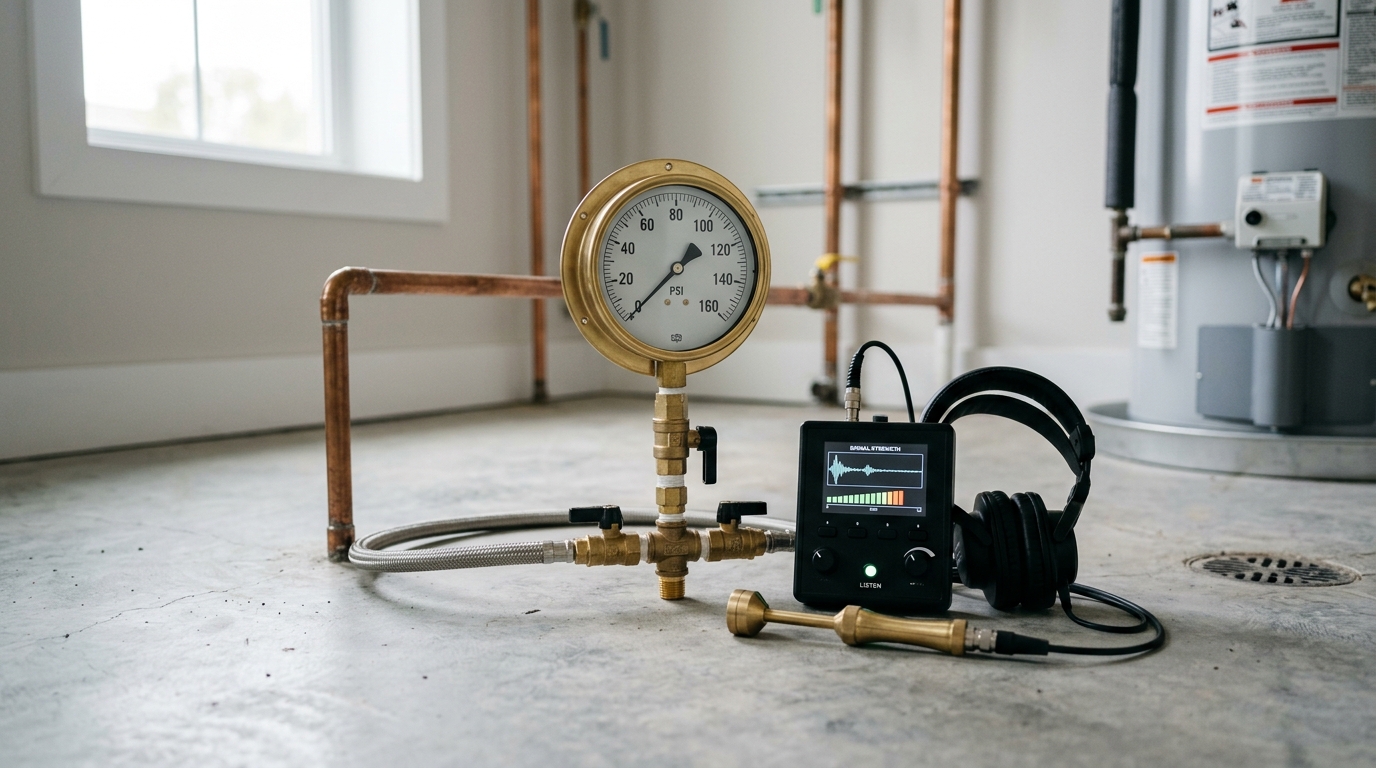
Using specialized electronic acoustic listening equipment, pressure-testing devices, and pipe-tracing tools, plumbers can isolate the compromised line and identify the precise point of failure beneath the slab. Once located, several repair paths may be considered depending on the pipe's condition and accessibility:
- Direct Spot Repair: If the leak is isolated and easily accessible, opening a small, precise section of the slab allows technicians to cut out the damaged pipe segment and install a durable replacement.
- Pipe Rerouting: In many cases, especially with older piping systems, the safest and least disruptive method involves capping off the failing underground line entirely and routing a new, modern supply line through walls or ceilings instead of through the concrete.
This is exactly the type of complex diagnostic challenge that The Drain Man Plumbing's emergency plumbing service is fully equipped to handle. Our team has the specialized equipment and technical experience required to locate underground water line failures accurately and implement lasting repairs that protect your home's foundation.
Protect Your Foundation with Prompt Professional Care
If you have noticed warm floor patches, unusual rushing sounds, or an unexplained spike on your water bill, do not wait for water to pool on your living room floor. Contact The Drain Man Plumbing directly by phone or submit a service request through our website to have an experienced technician inspect your plumbing system and protect your home from underlying foundation damage.