
Emergency Plumbing Advice
Gas Smell Near Your Water Heater: Immediate Safety Steps and What to Do
If you notice a rotten egg odor near your gas water heater, here is the exact step-by-step safety plan to protect your household.
August 5, 2026
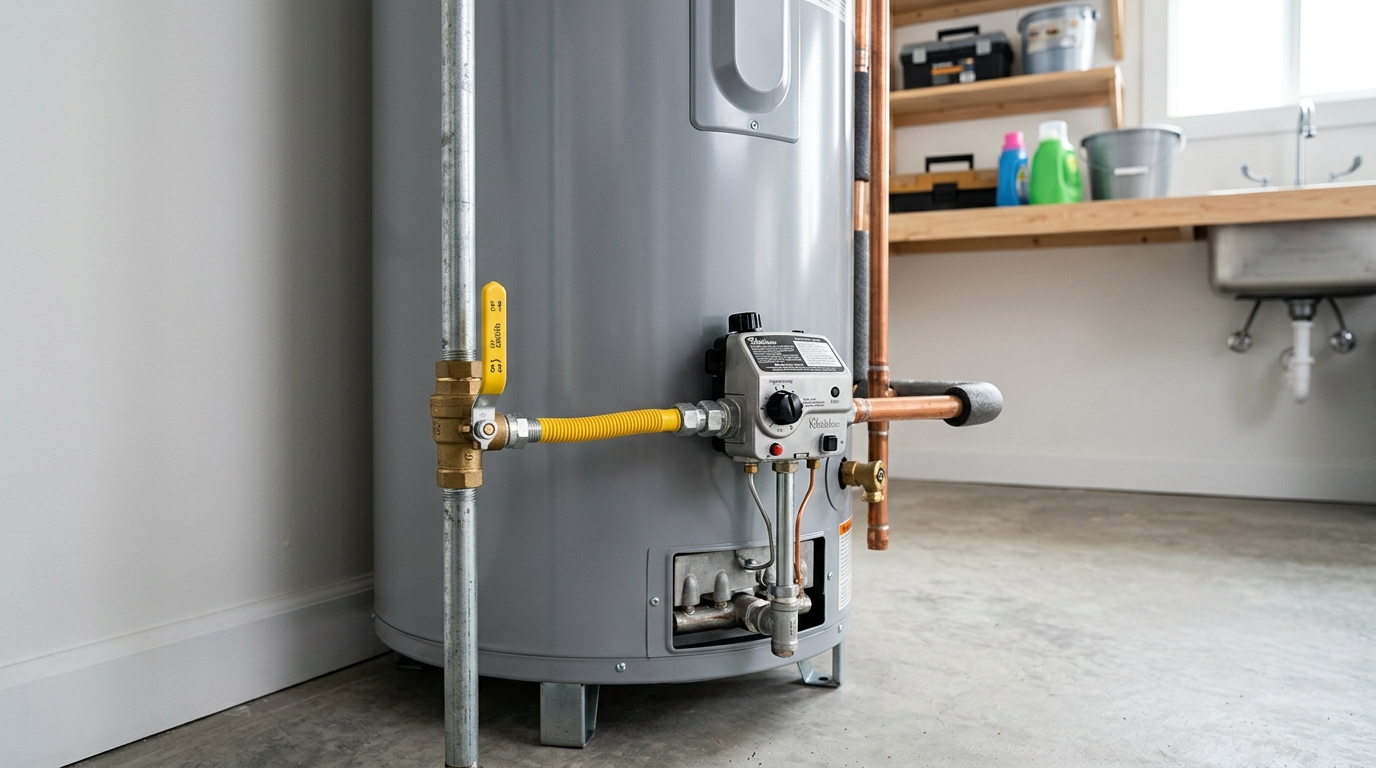
Can a gas smell near my water heater actually be a plumbing emergency? Yes, it can be, and safety comes first, before any troubleshooting. Natural gas and propane can catch fire or explode from even a tiny spark, which makes any suspected leak dangerous. When you smell gas near an appliance like a water heater, you should never try to find the leak yourself. Instead, treat the situation as an immediate priority, secure your household, and let trained professionals handle both the fuel supply and the plumbing equipment.
The Exact Steps to Take When You Smell Gas
Natural gas is naturally odorless, so utility companies add a harmless chemical called mercaptan to give it a noticeable sulfur or rotten egg smell. If this scent is lingering around your gas water heater or basement utility closet, follow these exact steps in order:
- Leave the house immediately: Gather all family members and pets and get everyone out of the building without delay. Do not pause to pack belongings, turn off appliances, or open windows.
- Do not flip any light switches or use a phone inside: Do not touch light switches, unplug cords, use landlines, or operate cell phones while still inside the home. Even the small electrical contact inside a wall switch or a phone relay can generate a microscopic spark strong enough to ignite accumulated gas.
- Call the gas utility or 911 from a safe distance outside: Once you are across the street or well away from your property, use your mobile phone to call your local gas provider's emergency line or 911. Inform them that you smell natural gas or propane near your water heater inside your residence.
- Only call a plumber once it is declared safe: Wait in a secure location until emergency responders or utility technicians arrive, assess the air quality, shut off the gas meter if necessary, and declare that the structure is safe to re-enter. Only after you receive this official all-clear should you contact a qualified plumber for repairs.
Why You Should Never Investigate a Suspected Gas Leak Yourself
Homeowners are often tempted to lean close to the water heater burner, sniff around gas pipe joints, or try tightening fittings with standard tools before calling for help. Investigating a suspected gas leak personally is extremely dangerous for several reasons:
- Unseen accumulation: Gas can pool silently in utility closets, crawl spaces, and enclosed basements. A space that smells faintly of gas in one corner may have a dangerous concentration near the ceiling or floor.
- Ignition sources are everywhere: Water heaters contain pilot lights, electronic igniters, and burners. Attempting to manipulate gas shutoff valves without proper equipment and safety testing can inadvertently trigger an ignition source.
- Specialized equipment is required: Utility personnel and licensed plumbing professionals use calibrated combustible gas detectors and pressure-testing gauges to find micro-leaks. Household soap bubbles or basic observation cannot reliably assess gas line safety or appliance integrity.
Diagnosing and Repairing Water Heater Gas Issues Safely
Once utility crews have cleared the immediate hazard and secured the primary supply line, the problem within the water heater system must be professionally diagnosed and corrected before hot water can be restored. In residential systems, gas supply lines connect directly to the water heater's gas control valve, burner assembly, and pilot mechanism. Because gas line piping and water heater installations are core components of residential plumbing, repairing these systems safely is a primary function of professional plumbing services.
A qualified plumber will perform several critical checks on your water heater:
- Control valve inspection: The thermostat and gas control valve regulate fuel flow into the burner. If internal seals fail or the valve cracks, fuel can escape around the appliance base.
- Supply line and union testing: Plumbers inspect the rigid black iron or flexible stainless steel connectors feeding the water heater, checking every threaded fitting, sediment trap, and shutoff valve for joint failure or improper sealing.
- Burner assembly and venting checks: Unburned fuel odors can also result from a malfunctioning pilot assembly, misaligned thermocouple, or blocked flue draft that prevents combustion byproducts from venting outside properly.
- System pressure testing: Before relighting any pilot or placing the heater back into service, a pressure test ensures the entire line holds secure without the slightest pressure drop.
Restoring Your Hot Water with Professional Care
Discovering an odor near your utility closet can be alarming, but acting quickly and following proper safety steps keeps your family and property secure. Once first responders have confirmed your home is safe, getting your water heater inspected and repaired ensures you have reliable hot water without lingering safety concerns.
If emergency services have cleared your home and you need your gas water heater inspected, repaired, or serviced in Jefferson City, Tennessee, contact The Drain Man Plumbing to schedule an emergency plumbing service visit and get your system working safely again.